AdvCash Master Card 0 fee

Have Faith and Never Give up Hope – a Mother’s Story

Unknown Reply 18:59

By Rochelle Paterson

Rochelle Paterson is a mother of a childhood cancer survivor, a cancer research advocate and CureSearch supporter.

Our daughter, Rea, was a seemingly healthy and normal toddler until one day, when she began to limp. After a few weeks of medical testing, her doctors found a tennis ball-sized tumor on her left adrenal gland that was wrapped around her aorta. Her full diagnosis was Stage IV High Risk N-MYC Amplified Neuroblastoma with Unfavorable Histology.

At the age of two, Rea had metastatic cancer.

We were devastated and terrified. We didn’t know what to expect and were concerned about how Rea would handle and respond to treatment being so young. 

Pediatric cancer families learn the hard way how underfunded childhood cancer is, how many different types of cancer need cures, and how limited our options often are.We need drugs that are personalized, less harsh and more effective to be available to all children battling cancer, so that survival rates increase with little to no long-term side effects. 

All we could do was listen to the oncologists, follow Rea’s lead and pray that her treatment plan would work. 

Many treatments and a clinical trial

Her protocol consisted of six rounds of high-dose chemotherapy, an autologous stem cell transplant, surgical resection of the primary tumor in her belly and left adrenal gland, 12 doses of radiation, seven months of immunotherapy, and another two years on a drug trial for remission maintenance. Rea was treated at Johns Hopkins All Children’s Hospital (JHACH) in St. Petersburg, FL, and we are grateful that she was able to join a clinical trial there. 

Rea and the rest of us stayed as positive as possible 
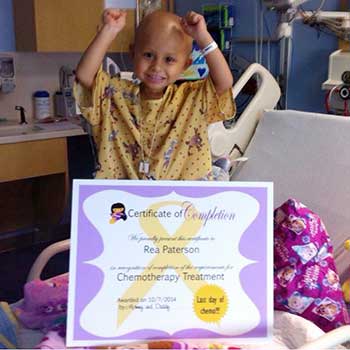
Thankfully, she responded miraculously well to treatment. She was 2 years old when she was diagnosed and 3-and-a-half when she finished inpatient treatment. She was nearly 6 years old when she completed the clinical trial. Now a happy and active 7-year-old, she has had no evidence of disease for five years! We’re so grateful for Rea’s health, but she does have special needs as a result of the toxic treatments. She has ongoing checkups and medical care with oncology, physical therapy, audiology and other specialty clinics. Treatment left her with one adrenal gland, hearing aids due to high frequency hearing loss, dental issues and chronic pain. For her and all kids that have gone through chemotherapy, radiation, etc., the reality is that even with the gift of survivorship, our children deserve so much better.

Our cancer journey taught us so much.
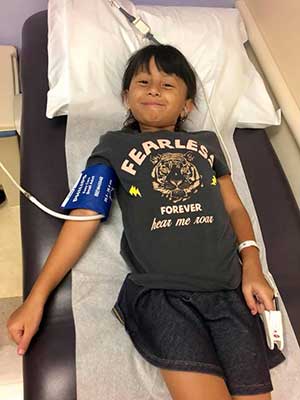
The main things we took away from our battle with cancer were: to have faith, live your best life, make lots of memories with your loved ones, and try not to sweat the small stuff. We also learned how underfunded childhood cancer is, so we encourage research funding and awareness as much as possible. That is why our family and friends support CureSearch and actively fundraise for the CureSearch Walk in Tampa. We push for support because we want drugs that are personalized, less harsh and more effective to be available to all children battling cancer, so that survival rates can increase with little-to-no long-term side effects.

Have faith and never give up hope.

I had to share this video to show you how awesome Rea is feeling and just how wonderful the Hem/Onc team is here at ACH! Rea's room has been dance party central, and she has worn her nurses and I out! She even had the Director of Hematology/Oncology shaking with us this morning! haha Just before the day shift RNs left at 7 PM, a bunch of other nurses walked by, saw the dancing through our window, and wanted in on the fun! It's been a great day..a GOOD kind of exhausting. So, needless to say, Rea is tolerating the 10 hour antibody infusions well so far. Her 2nd (of 4 for the week) will be done in a little over an hour. Thanks for checking in on our super girl. xoxo

Posted by Rochelle J. Paterson on Tuesday, April 21, 2015

Rea’s irrepressible personality has been so consistent. During her inpatient days, she would dance through admissions and the nurses joined in.  

—–

Each year, nearly 700 children like Rea are diagnosed with neuroblastoma in the U.S. Current treatments offer a survival rate of only 50% and have significant, long-term effects, including increased risk of developing deafness, cardiac insufficiency, infertility and additional cancers. CureSearch for Children’s Cancer is funding two neuroblastoma research projects right now at the University of Pennsylvania and Dana Farber Cancer Institute to develop less-toxic treatments and cures. Will you give the gift of research for kids like Rea? Every child deserves a chance to live a long, healthy life. 

The post Have Faith and Never Give up Hope – a Mother’s Story appeared first on CureSearch for Children's Cancer.
Eleven-Year-Old Cancer Survivor to speak at Golfer Greg Norman’s Annual QBE Shootout Event Benefitting CureSearch

Unknown Reply 14:55
Chase Hancock

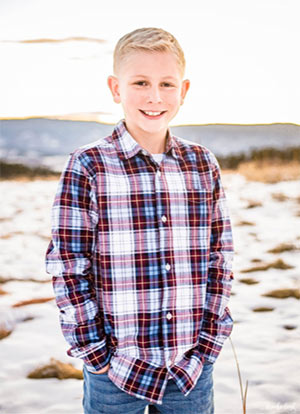
For more than 20 years, CureSearch for Children’s Cancer has been the primary charity beneficiary of the QBE Shootout, a professional golf tournament founded and hosted by legendary golfer Greg Norman. On Dec. 12, the QBE Shootout will welcome 11-year-old cancer survivor Chase Hancock as the featured speaker at its annual Pro-Am Gala. Funds raised from the event accelerate our mission to drive critical pediatric research so more and better treatments can reach kids. 

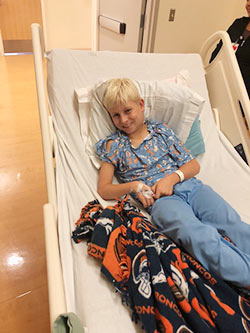
Each year, more than 15,000 children just like Chase are diagnosed with cancer. In 2018,Chase was living his best 10-year-old life, busy playing basketball, soccer and football. Sports are his passion and his teammates are his best friends. One afternoon, he told his mother that his jaw hurt. The pain worsened and a large lump developed. After multiple trips to the emergency room and a couple of hospital stays, Chase was diagnosed with Anaplastic Large Cell Lymphoma , Stage lll, a very aggressive form of non-Hodgkin lymphoma. Chase immediately underwent an intense treatment plan and he and his family practically lived at the hospital for months.

Chase’s inner athlete helped him recover. 

He used his athlete’s mindset—his drive and determination—to handle treatment and rebuild his strength. He finished treatment in January 2019 and has been in remission since. 

Now, Chase and his family are dedicated to bringing comfort to families facing childhood cancer and raising funds for critical research. 

“It is my dream to play in the NBA, and when I do, I would like to continue to pay it forward by visiting kids in the hospital and contributing to childhood cancer research,” said Chase. “I know it’s a big goal, but heck, if I beat cancer, I can do anything!”  Founded in 1989 and held annually in Naples, FL, the QBE Shootout has raised more than $13 million for CureSearch and kids like Chase, as well as other charitable causes.

Want more stories like this?

Get emails that matter, when it matters.

Please leave this field empty

The post Eleven-Year-Old Cancer Survivor to speak at Golfer Greg Norman’s Annual QBE Shootout Event Benefitting CureSearch appeared first on CureSearch for Children's Cancer.
Five Natural Remedies For Hair Loss

Unknown Reply 06:46

With so many products on offer, all claiming benefits for those trying to save their hair, it can be hard to sort the wheat from the chaff. We offer our favourite five, five natural remedies for hair loss that we can all apply ourselves using products from the local shop. 


Natural Hair Loss Remedies

Since the dawn of time… Well, certainly since men first began to lose hair, natural remedies have taken centre stage in the fight. Before we boil down what has been thousands of years of research into just five natural remedies for hair loss, let’s take a look at some of the history.

From ancient papyrus scrolls to the Greek philosophers, it seems wherever we look we find suggestions on how to fight hair loss. One Egyptian remedy required fats from a hippopotamus, a crocodile, a tomcat, a snake, and an ibex. Another, slightly simpler, saw porcupine hair boiled before being applied to the scalp for four days. Yet another used the leg of a greyhound sauteed in oil with the hoof of a donkey. 

Hippocrates, the father of western medicine, was a famous experimenter. He battled his own hair loss with everything from horseradish to pigeon poop. To his credit, he was the first to notice and document that eunuchs seemed to be impervious to hair loss, and speculated that castration might be a cure. A fact that would ultimately be confirmed by a research team at Duke University in 1995. 

Five Natural Remedies

Liqourice:

Liquorice can help with an irritated scalp and ease skin conditions there, including dandruff. It can also help to open pores and strengthens the follicles. There are plenty of products containing liquorice, shampoos, and ointments, but you can easily prepare your own. Add a tablespoon of the root to a cup of milk to make a paste, apply it to the scalp and hair and leave it on overnight. This can be repeated up to 2 or 3 times a week.

 Coconut Oil:

High in Lauric acid, coconut oil can help bind the protein in hair. This helps to protect the roots and the hair from breakage while the antioxidants aid healthy growth. 

Aloe Vera:

Possibly the most available of all… given that any of us can grow a plant on our kitchen window-sill. Recommended as a routine for those suffering from seborrheic dermatitis and other scalp ailments. Aloe vera clears scalp sebum that can otherwise obstruct hair follicles. Rub aloe vera directly into the scalp every two or three days and leave it on the scalp for 30 mins before washing.

Fish Oil:

Fish oil is high in healthy fats, especially Omega-3. Omega-3 is remarkable, it has anti-inflammatory properties. It can also boost growth by opening up the follicles. 

Ginseng:

This popular herbal remedy has a well-earned reputation for potency across a number of conditions. Applied to the scalp it can strengthen the follicles and hair. It achieves this, it is believed, because the saponins it contains can inhibit 5a reductase, which is related to hair loss in men.

HIS Hair Clinic

Natural remedies can play an important role in the fight against hair loss. They should not, it is important to add, replace the doctor or trichologist as your principal weapons in that fight. Hair loss is an incredibly complex affair, with many causes entirely treatable. 

Your first step, on noticing hair loss, should be a visit to an expert. They will help diagnose the precise cause and prescribe an appropriate course of treatment. Our list of natural remedies can all play a role in supporting that treatment, simple treatments you can apply yourself at home to enhance the work of your expert. The NHS provides some excellent information on natural remedies, for more information click here

If you would like to discuss your hair loss situation with one of our friendly team of experts simply complete the contact form at the side of this page, or click here to find your nearest clinic.


Is This A New Hair Loss Cure?

Unknown Reply 09:21

An American hairdresser has been gaining popularity with a potential hair loss cure. Her video demonstrating the technique has had nearly 50K views and received messages in praise. So we ask, is this a new hair loss cure? 


Nicola Chatfield 

Nicola is an American hairdresser. She offers a range of services from her website beyond just hair though. Nicola offers tips on beauty and health as well as wedding planning. But she hit a rich seam of popularity with a video she uploaded to YouTube. In the video, Nicola demonstrated the method for growing hair. She uses a pull-up bar to hang upside down for five minutes a day for a week. The theory behind what is known as ‘The Inversion Method’, is that the increased blood supply to the scalp area promotes hair health. That by improving the blood supply the hair will receive more nutrients and so grow faster and healthier. 

Nicola measured her own hair before and after her week of hanging upside down. It had, she told her watchers, grown by half an inch. She concluded it was ‘definitely worth a go’ and ‘definitely one to add to your routine’. Her only warning, that doing it more than once a month will result in your hair getting greasier. 

Her review was echoed by another American blogger, Chris Gault. He posted his own video to say ‘this works’. Gault claims to have used the technique for the last 18 months so clearly not buying into Nicola’s warning about grease. He does claim his hair is growing back, though judging by the picture on his site he would still seem to be stuck at around Norwood 5/6.

A Note Of Caution

Medical professionals have cast doubt on the suitability of the exercise. While hanging upside down does certainly push blood into the scalp, the delicate connections and blood vessels of the brain are also in the region. The pooling of blood in the area caused by hanging upside down carries a threat of those vessels bursting, leading to a brain haemorrhage.   

HIS Hair Clinic

There is sound bioscience behind the basic claim for the inversion method. It is just that there are so many easier ways to achieve it. Methods that do not require you to put your health at risk from serious injury. To be honest, we were just relieved to read that Nicola escaped unscathed from her experiment. Hanging upside down from a pull-up bar strikes us as slightly reckless, with the risk of a fall enough to put us off. We would recommend 5 minutes of exercise, upright or horizontal, as a better way to see blood pumped to your scalp in plentiful supply. 

For those of you who are unlikely to put exercise on your agenda, there are other options. Platelet Rich Plasma therapy does an infinitely better job of supplying a needy scalp with nutrients. For everyday use, a caffeine shampoo is a good addition to your routine. 

If you would like to discuss your hair loss situation with one of our friendly team of experts simply complete the contact form at the side of this page, or click here to find your nearest clinic.


Will Gene Editing Cure Hair Loss

Unknown Reply 09:14

Gene editing is at the cutting edge of scientific advances in medicine. News of results released this week suggests hair loss will be on the list of curable conditions. We look closer. 


CRISPR Gene Editing

Scientists discovered an enzyme, Cas9 (or CRISPR-associated), that had an amazing property. They found that it could be used as a pair of molecular scissors to cut strands of DNA.  American scientist, Jennifer Doudna, and her French colleague, Emmanuelle Charpentier were the first to discover the technology. Since then the story has been one of refinement. That’s all well and good you are no doubt thinking, but will gene editing be the cure for hair loss?

The ambition from the outset was that it could be a powerful tool in the fight against hereditary diseases.

Since 2005, when the technology was first discovered, the work has been picked up by labs around the world. Two American companies, Vertex Pharmaceuticals, and CRISPR Therapeutics, have been working on their treatment and looking to turn theory into clinical evidence. They have published the results of the very first clinical trials involving CRISPR technology. 

CRISPR Revolution

The team took two challenging conditions, sickle cell disease, and beta-thalassemia. They are both inherited conditions that result in blood disorders and are accompanied by grim side-effects. 

The headline-grabbing verdict in their published report was a winning one. They declared that the two treated patients have both been potentially cured of their diseases. It has been called a ‘remarkable scientific and medical milestone.’

In the trials, the team extracted bone marrow stem cells fro the patients and edited them in the lab. Fixing the genetic mutations that caused the disease and then infusing the cells back into the body. The body can then, in theory, take over and produce healthy new cells. 

Results

The patient suffering from beta-thalassemia received one treatment nine months ago. The patient had previously required 16 blood transfusions in a year but has not needed one since.

The sickle cell patient received their treatment over four months ago. Prior to treatment, they experienced an average of seven excruciating health crises a year. Since treatment, they have not experienced one.

HIS Hair Clinic

It is one of the more remarkable stories we have reported on over the years. A treatment that seems likely, if not probable, to be able to cure hair loss. But don’t hold your breath. This is the very first published trial results for the technology and there is still a long way to go. 

Estimates on cost for treatment are astonishing. Well over $2M. So the wait will be a long one. Not just for many more trial results to be published either. We need more than one clinic in one country working on a treatment. What we need is for hundreds of clinics to be working on the technology, and for cheaper faster ways to achieve it. Will gene editing cure hair loss? Quite possibly. We will, of course, be watching ever so closely. 

If you would like to discuss your hair loss situation with one of our friendly team of experts simply complete the contact form at the side of this page, or click here to find your nearest clinic.

Major Film Breaking Bald Taboo

Unknown Reply 13:34

Bollywood has just seen the launch of a first, a film with a bald central character. More than that, a film where the fact that the main character is balding is the central theme. We look closer.


Bollywood

The fact that the Indian film industry has a larger output than Hollywood is well known. You may not know it produces around twice as many films though. Or that nearly 1.5% of the population in India pays a day’s wages to visit the cinema. The director, Fatima Begum, became the first woman to make a film as early as 1926. Today, Bollywood produces a 1000 films a year in 10 different languages. They love a song, one film, ‘Indra Sabha’ contains an incredible 71 of them. To see a major film breaking bald taboo’s that have been around forever is great news. 

It is a huge and progressive business. One which takes it lead from, and has a huge influence on, the opinions and attitudes of people throughout India and beyond. 

So the release of a film all about a bald man trying to do something about it really caught our attention. Then we heard it was a sitcom and hearts sank. But fear not…

Bald Bala

Bala is the name of the film in question. Bala, the central character, starts out in the film as a salesman for a company that sells ‘women’s fairness cream’. A product designed for women to lighten their skin. But he gets demoted at work and sinks into despair, which triggers him to do something about his hair loss.

The film follows him through his battle to try and regain his locks. His character is set in opposition to Latika, a lawyer desperate to lighten her skin but failing miserably. 

Its a light-hearted take on one mans fight against hair loss. But its an ultimately redemptive story about the importance of coming to terms with yourself as you are.  

HIS Hair Clinic

Bala has received great reviews and looks all set for success. It has a full global release schedule and will have an audience of tens of millions. Great to see Bollywood leading the way. We would not be surprised if Hollywood is watching closely and their version follows along. You can see the official trailer here under the strapline ‘Bold is beautiful but what about Bald?’

If you would like to discuss your hair loss situation with one of our friendly team of experts simply complete the contact form at the side of this page, or click here to find your nearest clinic.

Study Reveals Hair Loss Hope

Unknown Reply 11:29

A US-led study has just published results of some amazing research. It points to a previously unknown process playing a key role in hair loss. 


Hair Growth Process

Our understanding of how hair grows has been improving for a while now. As we peel away at layers of complexity we must get ever nearer to a cure. Now a study reveals hair loss hope in the form of a completely new element to growth.

Not so long ago our knowledge boiled down to recognising the three phases of the hair follicle. During the first stage, called anagen, the hair is in active growth. This stage can last anything up to 7 years and see the hair grow up to 30 inches in that time. Of course, not everyone will grow hair that long. How long the growth stage lasts, and how long the hair might grow, will depend on genetics. age, and so much more. 

The second stage is short, sometimes just a couple of weeks. During this catagen stage, the hair detaches from the follicle. It is followed by a resting phase, called telogen. During telogen, the old hair will stay in place while the new hair develops underneath. Finally, it falls out to be replaced by the younger version. At any one time, you can expect around 15% of your hair to be in telogen. 

Uncovering Complexity in Hair Growth

When Francis and Crick cracked the structure of DNA in the 1950’s it opened a new world of medicine. The search was on to find the gene that controlled hair growth. Unfortunately for us hair loss sufferers, they succeeded beyond their wildest dreams. To date, they have found well over 200 genes that all play a part in the process. An incredibly high figure which speaks to the challenges involved in understanding how to tweak them to our benefit. 

But a team led by a US professor, Elaine Fuchs, has announced research results which casts an entirely new light on things. A process that is central to hair growth yet hitherto unknown.  

Lymphatic System – New Hair Loss Hope

In an amazing piece of bioscience, Prof. Fuchs’ team has been studying a communication system the body uses. It involves the stem cells our body uses every day to repair and heal and how those cells communicate. They have successfully described a molecular messaging system they use. 

By creating animals with transparent skin they were able to watch these communication channels in action. These ‘lymphatic capillaries’ are special blood vessels that form networks, including around hair follicles. 

HIS Hair Clinic

It is mind-bending stuff. What they have watched and reported on are stem cells that control the health of the hair. Doing it by switching on growth factors, or a drainage system to take away toxins for example. 

The promise is that this research might lead to a cure. That by instructing the stem cells to create hair growth we might, one day, simply be able to switch our hair on. Now wouldn’t that be something? You can see their publication, with all the stunning detail, here

If you would like to discuss your hair loss situation with one of our friendly team of experts simply complete the contact form at the side of this page, or click here to find your nearest clinic.

Allergan To Reenter Hair Loss Market

Unknown Reply 13:39

It can only be good news, to see a major global pharmaceutical firm with hair loss on its agenda. Especially true after failing at an advanced stage last year with one promising product. With Allergan to reenter the hair loss market on the back of an announcement this week, we had to take a closer look.


Allergan

Allergan is a Dublin based, global pharmaceutical firm. With a turnover last year in excess of $16B they are huge. With Allergan to reenter the hair loss market, sufferers the world over have every reason to be pleased.

They focus on developing, manufacturing and marketing branded products for patients around the world. One familiar name on their product list is botox. Although HQ’d in Ireland, Allergan started life as an American business called Actavis, who moved to Ireland to take advantage of the friendly corporate tax environment there. Once in Ireland, they acquired a number of large US pharmaceutical firms, including Allergan whose name they took. They received a $150M windfall in 2015 when a proposed merger with Pfizer broke down and Pfizer settled with a ‘break up fee.’ In fact, it was Obama’s plan to ban tax inversions that changed Pfizer’s plan to create what would have been the world’s third-largest merger.

A History Of Hair Loss

Allergan’s first attempt to enter the hair loss market did not fare so well. They took an oral hair loss drug through to a Phase IIa trial that completed last year. Unfortunately, the results of that trial disappointed and it was subsequently dropped from the Allergan pipeline list. 

Undeterred, Allergan has come back to hair loss with the announcement of a $750M deal. They have tied up a deal with a biotech firm called Exicure. Exicure work on developing gene regulating drugs. It is phenomenally complex bioscience. By tying up with a global pharma like Allergan they have big ambitions. Chief Executive, David Giljohann, said he was excited at the prospect of ‘combining our knowledge of nucleic acid therapeutics with Allergan’s deep expertise in medical aesthetics.’

Early Plan To Address Hair Loss

At this stage, the new partners are coy around exactly which markets they are looking to address. The great news for hair loss sufferers is that androgenetic alopecia is likely to be first on their list. They have correctly identified it as an underserved market. One where there is a $3.5B estimated annual spend on treatments and products. Most of which are extremely limited in efficacy.

HIS Hair Clinic

So it seems we can look forward to watching the work of Exicure more closely. They will be tasked with discovery and preclinical development work on any hair loss project. With Allergan then taking over at the clinical testing stage. 

You can read more about Exicure, and the science that underpins their research, by clicking here. They are an enormously welcome addition to the increasingly high-quality labs we see joining the fight against hair loss. It is exciting to see their work attracting the likes of Allergan. Equally, it is encouraging to see Allergan’s appetite for the hair loss market seems undamaged by their previous attempt. 

If you would like to discuss your hair loss situation with one of our friendly team of experts simply complete the contact form at the side of this page, or click here to find your nearest clinic.


Amazing Hair Loss Discovery

Unknown Reply 15:32

A team at Massachusetts General Hospital has just announced the results of a recent study. While researching a possible new tool in the fight against the condition they have made an amazing hair loss discovery. We take a closer look.


Hair Loss Study

Sheraz Khan, Ph.D., lead author on the study, published his team’s work at the end of October. They had been investigating a property of hair, namely its ability to generate an electromagnetic field. Their plan was to compare that electric field on subjects with full heads of hair to others with alopecia. While reviewing their results they made an amazing hair loss discovery. 

Currently, measuring the extent of our hair loss is best described as flawed. Not that we lack options. A dermatologist or trichologist will have any number of techniques to choose from. Global photography is popular. Less common is taking a phototrichogram unless you are taking part in a study. Daily hair counts, the wash test, and others are all good for getting a general picture but all have their drawbacks. Even the most accurate of them, the phototrichogram, requires a level of skill and experience to capture the images. Supported by even more expertise to interpret them correctly.

Hair Loss Study

But if the present methods for establishing, with any accuracy, the degree of hair loss, the future is bright. 

Dr. Khan’s team used a device known as a magnetoencephalogram (MEG). This can be used to create visual interpretations of an electrical field. The Massachusetts team designed a helmet with a MEG built into it and used it to study 17 subjects. 

Among those 17 subjects were 2 who exhibited alopecia. When the researchers studied the ‘map’ they made a stunning discovery. On those patients with alopecia, there was no electrical activity at all. It means that it is now potentially possible to measure the difference during a patient’s time with their professional.

As Dr. Khan puts it “This method provides a quantitative and objective assessment for the health of the hair follicles and can be used as a biomarker for the treatment of hair loss.”

HIS Hair Clinic

It seems strange that we have got this far in the fight against hair loss with no way of measuring it. Or its progress on an individual with anything but broad strokes, Norwood Scale anyone? 

The team at Massachusetts General has made an important breakthrough. For the first time, hair professionals can look forward to a future where they can measure their success. In the research field, teams will be able to test the efficacy of new drugs and treatments with far greater accuracy. 

Just one more important step on the way. Well done to Dr. Khan and his team. 

If you would like to discuss your hair loss situation with one of our friendly team of experts simply complete the contact form at the side of this page, or click here to find your nearest clinic.

Hair Care Tips For Hair Loss Sufferers

Unknown Reply 07:53

Taking care of our hair is something we all spend time doing. This is even more true for those of us experiencing hair loss. Here are our hair care tips for hair loss sufferers who want to give their hair its very best chance. 


Healthy Hair Routine

We all understand the importance of keeping our hair clean. Most of us have a consistent hair hygiene routine that will involve regular washing. This keeps the hair we have in prime condition and gives it the best chance to be healthy.  But there is a great deal more that can be done.

It is a rare advert break where at least one shampoo vendor is not pitching their product. Invariably, there is a chemical or plant that is lauded for adding bounce, shine, body, and sometimes all three. The bottom line is, pretty much any shampoo will clean your hair. Beyond that, we also need to consider an aspect of hair care which affects most, if not all, of us. 

Scalp Care

It is important to remember that our scalp is just skin. The covering of hair means it is typically out of sight, and all too often out of mind. It is skin populated with hair follicles, all in various growth stages. Usually, around 70% will be in the growth stage. That figure will vary slightly, according to the season, with greater growth in the summer. 

If we ignore the job of cleaning our scalp regularly, we can run into trouble. If you use a product on your hair like gel or hairspray, it can be washed out at the end of the day. But there can still be a cumulative build-up on the scalp that is harder to remove. In addition, the scalp can see a build-up of the natural oils we all produce. Whether caused by products or your own oils, the result can be itching and flaking. This is not an ideal situation for the hair follicles as, unattended, it can start to cause growth problems. So, once or twice a week you should give your scalp a scrub. There are many, many, products offering to do the trick. Though, you can always just add a teaspoon of coarse salt to your usual shampoo and massage that into your scalp. It will leave no residue and washes out easily. 

HIS Hair Clinic

The rate at which men, in particular, have embraced products for their hair has accelerated. We have moved away from a world where men’s grooming products boiled down to a handful of offers. Nowadays, the local chemist will have shelves full of grooming products aimed directly at men. It means the issues of scalp care are more pertinent than ever before. The regular use of straighteners, tight styles like man-buns, colouring, dry shampoo, and more, have all contributed to the issue. With that long list of interesting ways to abuse our own hair and scalp… why wouldn’t you detox with a scrub now and then?

If you would like to discuss your hair loss situation with one of our friendly team of experts simply complete the contact form at the side of this page, or click here to find your nearest clinic.


Is My Workout Causing Hair Loss?

Unknown Reply 09:29

So many of us make a visit to the gym part of our routine these days, for so many good reasons. We take a closer look at the question, is my workout causing hair loss? Exploring how it can and what you can do about it.   


The Benefits of A Workout

The 1980s was the decade when our individual health really came to the fore. It was the decade of the VHS video recorder and when home entertainment was in its infancy. In the early part of that decade, and on the back of a bestselling book from 1979, Hollywood star Jan Fonda released her first workout video. It would be a bestseller for most of the rest of the decade. It launched an entire fashion industry of its own, popularising spandex, leotards and legwarmers. You can read more about Jane’s story here 

In the nearly forty years since a lot has changed. There is a gymnasium on just about every high street, often more than one. They appeal to men and women, old and young. Over the same period, our awareness of what we eat has also become an obsession for many. Forget for a moment that we face an obesity crisis and regular stories about serious shortcomings in our food chain. The fact is that gyms and the services they offer, from gentle stretchers to ferocious spinning classes, have never been so popular. Little wonder, the clear links between fitness and our wider health are well understood.

The widely held belief is that this is purely a positive development. The reality is that what is right for one individual might not be a good plan for someone else. Take the example of Andrew Marr. A super busy political TV presenter, Andrew Marr was a committed keep fitter. Hard at it on his rowing machine at home one Sunday he suffered a stroke. It seems the demands of the routine he had chosen was just too much for some of the fragile vessels in his brain. 

While that is an extreme example, there are more everyday concerns which we should all have at the back of our minds. If you are among the group which has hair loss in their future, which is over half of all of us, you would do well to take some advice on board. Just how can a gym workout lead to hair loss, and what can we do about it.   

Hair Loss From Working Out

So how can going to the gym cause hair loss? In a condition called telogen effluvium hair loss is caused by a shock to the system. The shock might have been caused by anything on a long list. Accidents or surgery are pretty much the same as your body is concerned. A huge release of chemicals takes place. Sometimes, as part of that reaction, the body will close down ‘non-essential’ functions. Sadly, this can include growing hair. It does this by putting as many as 70% of your follicles into their resting state. Up from the usual 15%. The difference can vary from just about noticeable to shocking. 

So while a strenuous workout is,  on the whole, a positive thing to do, it can have drawbacks. The sweat produced, along with the stress chemicals which get released, can strain the follicles. It can lead to weakened hair shafts and leave the hair in generally poor condition. 

What Can I Do?

There are simple steps to follow, that can give your hair the best chance of surviving the gym unscathed. Keeping it clean is vital. Do not skip washing your hair after a workout. It is a vital step to make sure you clear it of sweat and anything else that might be lurking on the scalp. This is doubly true if your routine involves a swim in a chemically treated pool. Chlorine is not our friend, not when it is left on our scalp at least. If you are already doing this and still think you have a problem, then a visit to a trichologist might be a good idea. There you can get your hands on a solution to reduce the sweat coming from the scalp. 

HIS Hair Clinic

It is probably best to think of your hair as a bell-weather for everything about your health. Everything we eat and do is reflected in our hair. Eat healthily and exercise regularly to give your hair its best care. Eat badly and do no exercise, it will show up. That said, it might come as s surprise to many that you can work out too hard for your hair. 

If you would like to discuss your hair loss situation with one of our friendly team of experts simply complete the contact form at the side of this page, or click here to find your nearest clinic.


Amino Acids For Hair Loss

Unknown Reply 16:33

Among the regularly prescribed natural remedies for hair loss are amino acids. We take a closer look at these building blocks of life. 


Amino Acids

These organic compounds are what our body uses to create proteins. There are a total of 21 different amino acids. Some are more important than others, but they combine to provide essential processes. Using amino acids for hair loss is becoming popular and for good reasons. 

We are going to focus on three particular acids that are found in our hair. Each plays a vital role.

Cystine –

Vital for providing strength and rigidity between keratin strands.

Lysine –

It is found in meat and dairy products. In the body, lysine is thought to assist to play a pivotal role in how we absorb iron. 

Methionine –

One of the amino acids vital for keratin. Methionine is believed to be important in deciding at which point we go grey. 

Hair Loss and Amino Acids

So what makes these amino acids unusual, compared to almost any other natural hair loss remedy?  The answer is that two of them have been clinically studied. Because they naturally occur in the human body there is a motivation to understand them. This has led, in turn, to a much deeper understanding of their functions.

Building on that understanding to develop natural hair loss remedies has seen more ambitious research undertaken. Research aimed at turning that deeper understanding into something useful. Something like a hair loss cure.

Cystine, for example, was combined with another amino acid, histidine, copper, and zinc. Taken orally during a 50-week study it was seen to increase hair count significantly. Lysine, this time in combination with iron, vitamin B, vitamin C, and selenium, resulted in a 39% reduction in hair loss after 6 months. This same study also reported increased ferritin in the blood. This happened even for women for whom iron supplements had proved ineffective. Studies have suggested that methionine might be another critical part of the picture. It is certainly involved in the process, and has that reputation for defining when we go grey. To date, no study has shown its benefit as a supplement.

HIS Hair Clinic

Hair is made of keratin. In amino acids, we have the micro-components that make hair possible at all. These tiny biological miracles are fundamental to our existence, never mind our hair. But with our focus on hair, they play a key role in every stage. 

Of all the natural remedies available, those based on amino acids might be the solution of choice for many. They combine a natural regime with a scientific basis for their efficacy. A rare thing indeed. You can see a relevant published paper on the role of amino acids in hair loss here

If you would like to discuss your hair loss situation with one of our friendly team of experts simply complete the contact form at the side of this page, or click here to find your nearest clinic.


CureSearch Announces $450,000 in New Research Funding to Drive Innovative Treatments for Pediatric Neuroblastoma and MPNST

Unknown Reply 19:38

Contact:
Tessa Gatz, Director of Communications, CureSearch for Children’s Cancer
Phone: (240) 235-2204  |  tessa.gatz@curesearch.org

Bethesda, MD – October 28, 2019 – CureSearch for Children’s Cancer is proud to announce funding for two CureSearch Young Investigator Awards supporting promising new therapies for pediatric neuroblastoma and malignant peripheral nerve sheath tumor (MPNST). Each project will receive $225,000 over three years with the intent to move new therapies quickly into clinical trials within 2-5 years.

Adam Durbin, MD, PhD of the Dana-Farber Cancer Institute will investigate druggable targets in neuroblastoma, a pediatric tumor of the peripheral sympathetic nervous system that impacts nearly 700 children in the U.S. each year. Current neuroblastoma therapies contribute to a survival rate of only 50% and have significant long-term toxicities, including deafness, cardiac insufficiency, infertility and increased risks of additional malignancies.

Dr. Durbin identified a protein, EP300, that is necessary for neuroblastoma growth and worked to develop a novel, bioavailable compound that is able to selectively destroy EP300. If successful, this project will not only offer an innovative treatment strategy for high-risk neuroblastoma, but has the potential to expand into other EP300-dependent pediatric tumors, including myeloid leukemia and rhabdomyosarcoma.

“As both a scientist and pediatric oncologist, I am focused on developing new drugs for children with challenging-to-treat cancers,” said Dr. Durbin. “Funding from CureSearch for Children’s Cancer is critical to the early steps of our work to try to deal with these issues by developing less toxic, more effective therapies for children with cancer.”

Kathryn Lemberg, MD of Johns Hopkins University is pursuing a new treatment strategy for MPNST, an aggressive cancer that is typically seen in adolescence and young adulthood. These tumors can arise in patients with the cancer predisposition syndrome neurofibromatosis type I, without a known cause or as secondary cancers in response to radiation therapy. MPNSTs are incredibly challenging to treat as they often metastasize and do not respond well to chemotherapy or radiation therapy. When incompletely removed at diagnosis, the 4-year event-free survival rate is only 30% and the median overall survival rate in the pediatric population is 30 months.

“Pediatric and young adult patients deserve more effective treatments with fewer side effects than have been classically available for these tumors,” stated Dr. Lemberg. “As a Young Investigator I look forward to collaborating with others in the CureSearch community to successfully develop new medicines for sarcoma.”

Dr. Lemberg’s research aims to exploit a common characteristic of tumor cells to trigger their destruction. It will attempt to block the ability of cells to use glutamine, an essential nutrient needed to survive. If successful in MPNST, the findings of this study have the potential to expand to more than 1,700 kids who are diagnosed in the U.S. each year with pediatric soft tissue sarcomas.

“CureSearch Young Investigators are held to incredibly high standards. They are expected to move potential therapies out of the lab and into the clinic in an accelerated timeframe,” stated Caitlyn Barrett, CureSearch National Director of Research and Programs. “These two researchers are focused on promising therapeutics for deadly pediatric cancers where treatments are currently lacking. Their work over the next three years will propel the therapeutics toward clinical trials and more importantly to where they can reach children”.

###

About CureSearch for Children’s Cancer

CureSearch for Children’s Cancer, a national nonprofit organization based in Bethesda, MD, works to end childhood cancer by driving targeted and innovative research with measurable results in an accelerated time frame. CureSearch focuses on advancing the strongest research out of the laboratory and into clinical trials and development, where better, less-toxic treatments can quickly help children.

CureSearch Young Investigator Awards support researchers early in their careers to drive transformational science and deliver the next generation of cancer treatments.

For more information, visit curesearch.org, follow CureSearch on Twitter @curesearch or join the conversation on Facebook at facebook.com/curesearch.

Want more stories like this?

Get emails that matter, when it matters.

Please leave this field empty

The post CureSearch Announces $450,000 in New Research Funding to Drive Innovative Treatments for Pediatric Neuroblastoma and MPNST appeared first on CureSearch for Children's Cancer.

An Update on the Vincristine Shortage

Unknown Reply 18:02

The U.S. is currently facing a shortage of vincristine, a critical standard treatment for many childhood cancers. Vincristine is a sterile generic injectable that has been approved to treat (and cure) children with cancer for over 5 decades. Vincristine is utilized by nearly every child with cancer and is a critical component of treatment regimens for children with leukemias, lymphoma, brain tumors, bone tumors, neuroblastoma, Wilms tumor, rhabdomyosarcoma. This shortage represents a true crisis, as there is no alternative or recommended substitution for vincristine.

If you are being directly and currently impacted by the shortage, please work with your care team and contact the FDA at drugshortages@fda.hhs.gov

Read the latest update and plan of action from Dr. Peter Adamson, Chair of the Children’s Oncology Group.

The post An Update on the Vincristine Shortage appeared first on CureSearch for Children's Cancer.

Trek for 43

Unknown Reply 19:52
Trek for 43

Join supporters around the nation this National Take a Hike Day and raise critical funds for pediatric cancer research. 

Trek for 43, CureSearch’s newest program, empowers people to come together to tell children’s cancer to “take a hike” during National Take a Hike Day weekend, November 15-17. 

“This program is great because it can fit in every workplace, community or school,” said CureSearch National Manager, Brecka Putnam. “Trekstarters have the ability to select the length and location of their hike, from challenging treks up the side of a mountain to mall walks and everything in between” 

Join supporters from across the country participating in a volunteer-led Trek for 43 event or create your own to show your support for the 43 kids diagnosed with cancer each day and raise funds for innovative children’s cancer research

Creative Trek for 43 plans are emerging across the nation. In Atlanta, Georgia, medical staff at Children’s Healthcare of Atlanta are organizing multiple hikes in order to accommodate as many people as possible by providing options for distance and difficulty. In St. Louis, Missouri, CureSearch Ultimate Hike alumnae Susan Pregon is organizing a company-wide event and the workplace is paying registration costs for the first 20 employees to join.

Interested in becoming a Trekstarter in your community or participating in an event near you? Visit trekfor43.org for more information, or contact brecka.putnam@curesearch.org.


Want more stories like this?

Get emails that matter, when it matters.

Please leave this field empty

The post Trek for 43 appeared first on CureSearch for Children's Cancer.

Busy Bee Gives Back by Raising Funds to Support Childhood Cancer Research

Unknown Reply 21:29

Throughout Childhood Cancer Awareness Month, CureSearch teams up with advocates across the nation including passionate corporatepartners like Johnson & Johnson, Inc who are raising funds and creating awareness intheir 18 Busy Bee stores throughout Florida and Georgia from August through October.

We had a chance to sit down with Megan Forcey, Director of Advertising and Ecommerce, to learn more about Busy Bee’s philosophy on giving back:

Q: Why do you support CureSearch and Childhood Cancer Awareness Month?

A: The mission of CureSearch to work towards ending childhood cancer is such an important goal and one that everyone can get behind. No child should have to go through or suffer cancer and treatment.

Busy Bee
In-Store Signage
encouraging participation

Q: What part of this campaign are you most excited about?

A: I think the thing that is most exciting is being able to include our guests and allow them to also make an impact as well. We love to sponsor and help causes that are dear to us, but to also be able to give our guests the chance to be involved is priceless! 

Q: Why are you proud to work for Busy Bee?

A: Busy Bee does an amazing job of maintaining philanthropic partnerships and supporting the community. It’s heartwarming to participate in these endeavors.

Q: How does this partnership reflect the goals and values of Busy Bee?

A: Our partnership with CureSearch is a perfect fit for us. We are a fun and whimsical brand that believes that no one should suffer, and we are blessed to be able to help achieve that.

CureSearch is proud to partner with Busy Bee in honor of Childhood Cancer Awareness Month. Together, we’re making adifference in the lives of the 40,000 children who undergo cancer treatment each year.

Learn more about how you can get involved and give back during Childhood Cancer Awareness Month.


Want more stories like this?

Get emails that matter, when it matters.

Please leave this field empty

The post Busy Bee Gives Back by Raising Funds to Support Childhood Cancer Research appeared first on CureSearch for Children's Cancer.

Tips to know before going on an Ultimate Hike

Unknown Reply 07:20

Raleigh Ultimate Hike

Most CureSearch Ultimate Hikes take place in the fall… meaning that hikers are gearing up to train and prepare now. We asked a few of our experienced Ultimate Hikers for their most important tips to share:

Hike is hard. Train harder.
Ultimate Hiker Keri Fitzgerald says, “Don’t skip the prep work.” Training properly for hike is absolutely essential for your body and mind and it is also a great bonding experience between hikers. Fitzgerald says, “Training with the group is fun!”
 
Ultimate HikeThe trail is not a red carpet.
Ultimate Hike is not the most practical event in which to debut a new outfit. With that being said, don’t hike in something you have never worn before. Ultimate Hike coach Robin Waddell recommends wearing familiar, well-worn clothes in order to better avoid blisters and unnecessary discomfort.
 
Pack lightly.
Don’t overpack on the trail. We know, it’s tempting to try and stuff everything in sight into your comfort bags, but resist the urge. Fitzgerald says, “I brought a lot of stuff for my comfort bags last year and it turned out that I didn’t need most of it. [CureSearch] is there at those aid stations with everything anyone could ask for.” Stick to essentials such as boots, socks, trekking poles, duct tape, trail mix, a hat and batteries.
 
But don’t forget this!
One thing that you can never bring too much of is a positive attitude. Remember who you are hiking for — the 43 kids diagnosed with cancer every day. Stay strong and positive.
 
The more the merrier.
Make sure to tell your friends about Ultimate Hike and encourage them to join you on your journey. Waddell says, “You can make it on your own, but it is better to have a friend to share the good and the bad and help encourage you.”
 
Finish line Ultimate HikeThere’s an app for that.
Ultimate Hike coach Holly Frazier uses training apps during hikes in order to get the best experience. Popular hiking apps have features such as reminding hikers to drink water and stay hydrated or calling out each mile a hiker completes in order to keep them motivated.
 
Cue the confetti!
When the hike is over, don’t forget to celebrate your achievement. Waddell says, “Whether you hiked one mile or 28.3, you are awesome! You have trained hard and raised money for a very worthy cause and you should be very proud of yourself!”
 
To learn more about how you can tell children’s cancer to “take a hike” visit curesearch.org/UltimateHike.

Want more stories like this?

Get emails that matter, when it matters.

Please leave this field empty

The post Tips to know before going on an Ultimate Hike appeared first on CureSearch for Children's Cancer.

Why Research? For one mother, the answer is simple

Unknown Reply 10:49

By Amy Rodriguez Ricabal –mother of a childhood cancer survivor, CureSearch supporter and childhood cancer advocate

This Childhood Cancer Awareness Month, we are encouraging supporters to share their stories in answer to the question, “Why Research?”. For Amy Rodriguez Ricabal, the answer is her daughter, Natalia. This is her story.

Natalia SophiaIn August 2013, at the tender age of 8, my daughter, Natalia Sophia, was diagnosed with localized Ewing sarcoma of her femur bone. In addition to limb salvage surgery, she endured an intense chemotherapy regimen for a year and radiation treatments every day for a month. By the grace of God, she has overcome cancer and has been cancer-free for 60 months! But, due to antiquated, harsh cancer treatments, she is now battling the late effects of treatment.

Natalia underwent an intense regimen of five toxic agents as well as radiation and she is battling the effects of her treatment daily. Other children are battling secondary cancers caused by their treatments. There are many side effects from these too-toxic drugs–sadly, some children end up dying from organ system failure or some other disease developed from the treatment itself. 

Our family supports CureSearch because we need better funding for childhood cancer research. We need more kid-friendly drugs that target cancer cells with fewer side effects, not treatments for adults that are too toxic for their little bodies. That’s why we actively support CureSearch via the Tampa Bay CureSearch Walk. We walk in memory of the children who didn’t survive and for the health of every child battling cancer now and in the future.

Before my daughter’s diagnosis, I knew nothing about childhood cancer. Now that I have been pushed into this world, it is my calling to make others aware. More awareness means more funding. More funding leads to better medications and treatments for these children. They deserve a better outcome–a real chance at a promising future, not a future of doctor’s offices, surgeries, procedures or worse.

Show your support this Childhood Cancer Awareness Month. Share your story on social media by using the hashtag #WhyResearch and tagging @CureSearch, or make a donation today.  

——

For 30 years, CureSearch for Children’s Cancer has worked tirelessly to accelerate the development of new, less-toxic children’s cancer treatments, including a promising new treatment for the cancer that Natalia Sophia was stricken with – Ewing sarcoma. Learn more about the progress we are making thanks to the support of volunteers and advocates like Amy Rodriguez Ricabal.


Want more stories like this?

Get emails that matter, when it matters.

Please leave this field empty

The post Why Research? For one mother, the answer is simple appeared first on CureSearch for Children's Cancer.

Hair Loss Drug Delivers Exciting Trial Results

Unknown Reply 09:18

News is in from America where exciting trial results for a hair loss drug have been announced by Concert Pharmaceuticals We take a closer look.


Hair Loss Trial Yields Results

Concert Pharmaceuticals, headquartered in Lexington, Mass, have announced that their hair loss drug delivers exciting trial results. 

It follows from their last official announcement in November 2018 when they gave us their first set of Phase 2 results. At that time we were given results for the 4mg and 8mg dose levels. In the conclusion was the teaser that the SALT score, the measure used for success, was sufficient to take the 8mg dose forward to Phase 3. All the more impressive because the patients, at the 24-week point, were still continuing to see an improvement in their condition.  At that time were also told we would have to wait a little longer for the results from the 12mg dose level. 

Hair Loss Drug CTP-453 

When Concert announced their results last November the promise of a cure for Alopecia Areata (AA) was teased. This is the unpleasant condition where sufferers can lose hair from anywhere on the body, but usually the scalp and usually in circular patches. An estimated 650,000 Americans are thought to be suffering at any one time. It is a condition that usually affects younger people. Current practice is to treat them with a series of painful corticosteroidal injections. Potentially dozens of them. So to say a new treatment is desperately required would be an understatement.

The Future For Hair Loss?

Concert has now delivered those 12mg trial results. The headline-grabbing quote here was that 78% of the patients on that relatively high dose experienced improvement. Improvement that they described as either ‘much improved’ or ‘very much improved.’ 

The current version of the treatment sees a pill taken twice a day. Itself a leap forward from injections that can only be tolerated for a while. 

For their part, Concert is now looking at a 16mg dose in an open-label phase 2 study. They are also working on a version where the patient only needs to take one pill a day… which would involve a single 16mg dose. 

The data of all these studies will be used to inform a meeting with the FDA. A meeting where Concert will be looking to plan the Phase 3 trial for 2020. 

HIS Hair Clinic

It is encouraging that every time Concert comes back to report their latest results things seem to have improved. It is clear their ambitions for CTP-453 have risen and we await their next announcement. Which will, we hope, be the fine details of a full Phase 3 trial. The FDA has designated AA as one of eight diseases that are to be given priority. In light of that, we can expect full support from them towards Concert as they look to expedite trials and move to production and marketing. 

If you would like to discuss your hair loss situation with one of our friendly team of experts simply complete the contact form at the side of this page, or click here to find your nearest clinic.


Hair Loss Cap Has Passed Clinical Trials

Unknown Reply 05:18

News from Australia reaches us that an LED hair loss cap has passed clinical trials. A full double-blind placebo-controlled trial no less. We look closer. 


LED Caps 

The theory behind using light to promote hair growth and combat hair loss is an interesting one. The idea is that low wavelengths of light can irradiate photons which can be absorbed by the cells. They have been around for years now and proved popular in the market. But this study marks the first time a hair loss cap has passed clinical trials, of the sort normally reserved for medicines.

Modern caps feature dozens of medical-grade lasers and LED’s to do the job of producing those photons. 

Early reactions to the advent of the LED caps were cool. While the FDA did approve them for use this was based more on their safety and ‘equivalence.’ Where ‘equivalence’ simply means that they are similar to devices that came before them. You will note the absence of a reference to efficacy. It is a recurring problem for hair loss sufferers that FDA approval for hair loss devices is often just referring to safety. 

A team in Australia have just raised the bar by publishing results of their own trial of one product. A product, incidentally, that the FDA approved back in February 2018.

Hair Loss Trial

The trials were conducted by a team from the University of Melbourne. Principal investigator, Rodney Sinclair MD, professor of medicine, outlined the parameters for the trial. “We used the same primary and secondary endpoints as were used in (the) finasteride and minoxidil studies. We used placebo caps. Participants and evaluators were blinded, and as an outcome, these results can be trusted.”

Even with the relatively small size of this study, with 18 participants, this is a refreshing approach. The cost, even for a small study, is prohibitive. 

Hair Loss Trial Results

No doubt cost was one reason why we have not seen a full clinical trial before. But there was always the possibility that the reason was a lack of faith in their efficacy. 

That doubt may have been removed with the publication of the Melbourne team’s results. 

All participants were given a cap to use for 10 minutes a day for 26 weeks. During this time they used no other hair loss product. Comparing the two groups, placebo and active, the group that received the treatment were shown to have better outcomes. To the tune of 21.3 more hairs per square centimetre. Those treated with the placebo cap continued to lose hair. No adverse effects were reported during the trial and no volunteers needed to cease treatment. 

HIS Hair Clinic

We have waited a long time for this sort of clinical trial to be applied to laser caps. The results were worth the wait too. Adding efficacy to the safety already confirmed by the FDA. We hope that as the technology develops alongside our understanding of the processes involved, the results improve further. We will be watching and reporting back. You can see the press release as published in Business Wire by clicking here


Hair Loss Drug That Turned Spanish Babies Into Werewolves

Unknown Reply 07:21

It seems a hair loss drug has made its way into a medication for infants. A hair loss drug that turned Spanish babies into werewolves. We look closer.


Infant Care

Bringing up a baby is a stressful business. In the time before a baby learns to speak, parents must master the art of reading signs that their child is unwell. Whizzing them round to the doctor for a second opinion is a regular trip for many. 

The babies caught up in this story all had something in common. They had been diagnosed with indigestion. For a lot of parents that simply means slinging said baby over your shoulder and tapping its back until the wind comes out. Presumably, these babies were suffering from something slightly more acute. They were all taken to see doctors, and they were all prescribed medication.

Hair Loss Drug In The Mix

The medication the babies were all put on was omeprazole. The drug was supplied by a company called Farma-Quimica Sut and was part of a formula for babies. 

16 babies given the drug developed a condition called hypertrichosis, also known as ‘werewolf syndrome’.  It sees the sufferer sprout hair from the face, in places where hair does not normally grow. 13 mums came forward in July with another 3 in August. 

Spanish health authorities removed the formula from the market and conducted an investigation. They discovered that the formula had been manufactured in India. During the production process, it had been contaminated with another medicine used to treat alopecia. 

Hairy Future?

The good news is that the condition, when not triggered by baby formula, is extremely rare and entirely treatable. Of course, that does depend on having access to the treatment.  See this article from earlier this year in the New York Post for an interview with three Indian sisters who do not have that access. For the babies involved in this case simply stopping giving them the formula that caused the problem will see it go away. 

HIS Hair Clinic

It must have been an incredibly distressing experience for these parents. Good to know that the cure is simply stopping the tainted formula. And that Farma-Quimica Sut have had their licence suspended. 

If you would like to discuss your hair loss situation with one of our team of friendly experts, simply complete our contact form on this page or click here to find your nearest clinic.


Are Phytochemicals The Key To A Hair Loss Cure?

Unknown Reply 06:31

For the first time, a critical review of available data has been performed on plant-derived phytochemicals. It is time to ask the question, are phytochemicals the key to a hair loss cure?


What Are Phytochemicals?

To answer the question, are phytochemicals the key to a hair loss cure, we should first take a closer look at this ancient plant-based system. Broadly speaking, phytochemicals are chemicals produced by plants. Consider for a moment that every plant produces them and you will get an idea of their scale, diversity, and complexity. Plants produce them to aid with growth but also to fight off competitors and predators. They also play a role in fighting off pathogens that would otherwise kill the plant. 

Some have extremely familiar names, caffeine in our coffee and polyphenols in tea are examples. While the vast majority are obscure, some have already made their way into our hair loss world. Saw Palmetto has been used in the fight against hair loss for decades. Beyond hair-loss, phytochemicals are credited with being able to reduce our risk of developing chronic diseases. 

Efficacy On Scalp And Follicles

The lead author of this critical review, Gabriela Daniels from the Cosmetic Science Research Group based in London, set out with bold ambition. Using all available date from 1990 onward her team looked at every oral and topical phytochemical treatment aimed at hair loss. Caffeine and Saw Palmetto were on the list, but so were a surprising number of others. Who knew so much work had been done on so many different phytochemicals!

According to the authors, more studies need to be performed and the evaluation criteria can be improved. The good news is that this did not stop them arriving at some interesting conclusions.

Hair Loss Cure Hope?

The report concluded that all the phytochemicals that have been studied produced an improved understanding of the processes involved, they said  ‘…well documented pharmacological activities and pathways, which hair researchers have also identified as potential regulators of hair growth using cell and organotypic essays.’  

Top of the pile, for the authors, was a handful of chemicals which stood out. Caffeine, named in the report as the most widely studied, along with phenolic compounds and phytosterols were identified as the preferred choices. 

HIS Hair Clinic

The depth of the research that the team had to collate is as surprising as it is encouraging. Some, like caffeine, will have been familiar to all of us. Others, like pumpkin seeds, were surprising to see on the list. Still more were chemicals that were completely new to us. 

Highlighting just three phytochemicals as standing out will no doubt inform future research. As will the report’s conclusions around improving studies. They included ideas on combining vitro and in vitro results as well as more gender-specific studies. You can read the report for yourself by clicking here

If you would like to discuss your hair loss situation with one of our team of friendly experts, simply complete our contact form on this page or click here to find your nearest clinic.


Can Inositol Help With Hair Loss?

Unknown Reply 08:39

Much has been made of the abilities of Inositol. Credited with helping everything from panic attacks to PCOS it is suggested it might have an even more exciting future. We ask, can Inositol help with hair loss.


Inositol – Arriving With A Bang

Inositol is a type of blood sugar that is mostly produced in the kidneys. All of us are producing it at the rate of around 2g a day. It performs a few important jobs, responding to hormones, growth factors, and neurotransmitters.  This is all familiar ground to us in the hair loss world. JAK inhibitors, one of the great hopes of the hair loss industry currently making its way through trials, work on the same signal system. So it is entirely reasonable that we ask, can Isotinol help with hair loss?

Its first use outside of the human body came in the 1930’s. Professor Edward Barlow demonstrated a method for extracting large amounts of Inositol from the phytic acid in waste corn. He proposed using it in its nitrate form as a more stable alternative to nitroglycerin. To this day it can still be found in modern explosives, where it is used to gelatinise nitrocellulose for use in bombs and rocket propellant. 

Applications For Inositol

As a medical treatment, Inositol has already found a couple of important uses. It is considered safe and effective for polycystic ovary syndrome (PCOS). It works by increasing insulin sensitivity which, in turn, can improve ovarian function. It seems to work for around 70% of patients treated… a remarkably high proportion, and with a high safety rating. They have not given up on the other 30% either and work is being done to investigate why the treatment is failing them. 

It has also been found to be effective for preterm babies at risk of infant respiratory distress syndrome (RDS). 

Can Inositol Help With Hair Loss?

The evidence from the results of treating PCOS patients has led some to think so. Its ability to reduce testosterone levels and balance hormone levels do suggest there might be something there. But that remains a long way from being a treatment. As this point, there has been simply no research done to investigate. In any sort of trial, the efficacy could be confirmed or refuted. If successful, more work would need to be done to identify optimal dosage and frequency. Then a full-blown double-blind trial with lots of real people to prove to the FDA it deserves its place on the market. 

HIS Hair Clinic

People are taking supplements to boost their own 2g a day production rate. They are taking them for a variety of reasons, no doubt due to some of the hyperbole written around Inositol. It doesn’t help that it is found in its highest concentrations in the brain. So some might take the view that if it does not help them grow hair it might make them smarter. 

You can boost your intake of Inositol by adding more nuts grains and fruits to your diet. Be warned that many of the foods high in Inositol are also packed with Phytates. Which can reduce your ability to absorb iron and other important minerals… important to processes including hair growth.

If you are going to try supplements then there is a list of side effects associated with taking Inositol in significant quantities, measured at 12g or more. They include nausea, gas, insomnia, dizziness, and headaches. 

For us, for now, the jury remains out and the evidence seems very thin. Its benefits to PCOS sufferers and pre term infants are wonderful. It is also being examined for its ability to help people with panic attacks, and in large doses for people with depression. This important work is in its early stages and no results have been published yet. To learn more about its uses visit the WebMD page on Inositol here

If you would like to discuss your hair loss situation with one of our team of friendly experts, simply complete our contact form on this page or click here to find your nearest clinic.

Gary Lineker Trolled For Hair Loss ‘Joke’

Unknown Reply 06:19

A throwaway line by the host of BBC’s flagship football show, aimed at his two bald co-hosts, has triggered a reaction with Gary Lineker trolled for hair loss ‘joke.’


Gary Lineker 

The former Leicester and England striker is these days to be found presenting football shows on TV. Not just for the BBC either. He stirred controversy when the BBC published the salaries of its top earners and Gary’s name featured large at the top of the list. As did the fact that he was registered with them as a ‘freelancer.’ It meant that as well as lucratively hosting Match of the Day every Saturday evening during the season, he pops up all over the world doing the same job for a host of sports channels. Having enjoyed a successful spell during his playing career in Spain, with Barcelona, he speaks fluent Spanish too.  So don’t go thinking a football fan can avoid him easily.   

The show he presents, Match of the Day, is the longest-running show of its kind anywhere in the world. Not so much a show as an institution. The outcry when the BBC carelessly, albeit briefly, lost the rights to a commercial channel was huge. And rectified the next time the bidding came round.

Hair Loss Joke

Lineker provoked a wave of criticism when, last weekend, he introduced the show promising lots of action. Enough, he said, to make your hair stand on end… unless you are Danny Murphy or Alan Shearer. Shearer and Murphy, his bald co-hosts, looked toward the floor and shook their heads in unison. It is not the first time he has made bald jokes aimed in their direction. Nor indeed is it the first time he has courted trouble, his personal Twitter account has been used to spout many of his personal opinions. The stand-out was the trouble he created by announcing that Brexit should be subject to another referendum. BBC rules prevent employees from declaring their personal thoughts on such matters. On this occasion, the BBC decided Gary Linker, as a freelancer and as a sports host, was not subject to these rules when using his own account. The decision got some acidic responses from other BBC sports presenters who felt Lineker had crossed a line. An accusation Lineker himself denies emphatically. 

The bald joke prompted complaints to the BBC. Many trolled Linker using their own Twitter accounts. The BBC for their part has been tight-lipped in response, refusing to even confirm that bald jokes would not feature again in the future. One commented, “I can take a joke, but have you not noticed that bald blokes are literally the only people left in society that can be **** on with impunity.”  A fair point we thought, even with the expletive deleted. Another made a more personal point, “I started going bald at 14, totally destroyed my confidence.”

HIS Hair Clinic

Lineker will not change his style, it has bought him far too much success to change now. But for us, the BBC has a duty of care to the watching public, and that includes the next generation of young teens who will endure hair loss at a seriously challenging time of life. It is about the kind of world we want to live in. If you are the parent of a young hair loss sufferer, Alopecia. org, the hair loss charity, offer a download full of useful advice and tips. See it by clicking here.

Match of the Day is compelling TV and has been for 50 years because the core content is the superbly competitive English Premier League. The show itself would benefit from a makeover. Get rid of the stale presenters and disinterested pundits, they add little in terms of entertainment and absolutely nothing in regards to informed opinion or insights. 

As for Lineker’s bald joke, it was a poor one. Made worse by being told on live TV and aimed at his co-workers. What other parts of the body can be the subject of such public mocking? Whatever the niceties of Mr. Lineker’s contract with the BBC, his employers should have the authority to demand it stops. 

If you would like to discuss your hair loss situation with one of our team of friendly experts, simply complete our contact form on this page or click here to find your nearest clinic.

Subscribe Our Newsletter

Colaboradores

Arquivo do blog

Tecnologia do Blogger.

Search

Most Complete Tools & Resources

Most Complete Bloggers, Freelancers & Youtubers Tools and Resources

How To Start a Blog Guide

How to Start a Blog in 3 minutes banner

Professional Email Marketing

Email Marketing for Professional Bloggers

Build Your Online Store

Shopio Build Online Store

Start your own Consultation business

Insta Consultant Toolkit

Follow us on Pinterest

Follow me on Pinterest