AdvCash Master Card 0 fee

SMP: What, why and how?

Unknown Reply 10:43

You’ve probably read about scalp micropigmentation (SMP) on this site. You might have noticed we’re big fans! But it is quite a tricky concept to get your head around. Unlike other hair loss treatments, we’re not actually trying to stop hair loss with SMP, we’re just stopping it from being a problem anymore.

So we thought we’d put together a general information post on SMP. How it works and what to expect from the treatment.

What is SMP?

Scalp micropigmentation is a hair loss treatment like no other. Pigment is injected into the scalp in thousands of tiny microdots, creating the illusion of active hair follicles.

How does SMP differ from tattooing?

It is a similar process, but SMP injections are delivered much less deeply than a regular tattoo, which allows us to be much more precise. It also avoids a ‘blob’ effect, and we can create a very realistic hair follicle impression.

How can you make SMP look like real hair?

If you just injected uniform black dots across a scalp, it might look effective from a distance. On closer inspection however, it would be very obvious that it wasn’t real hair. With SMP, we inject each dose of pigment to a slightly different depth and from a slightly different angle to the last, replicating the way that real hair grows.

We also use a number of different pigments for each client, closely matched to their hair colour, for as natural a finished effect as possible.

Who is a suitable candidate for SMP?

Literally anyone could have SMP and it would be effective, although we do stick to over-18s! Man or woman, young or old, the beauty of this procedure is that it is hugely versatile.

You can leave your head shaved and have a buzz cut, a popular option for our male clients. Or you can grow your hair out and just use SMP to disguise the thinning areas. This works especially well for women suffering from female-pattern baldness, which tends to present as a diffuse thinning across the whole scalp.

Can I really choose my own hairline?

Yes, you absolutely can. Our technicians will work closely with you to ensure that the hairline you choose is the right one for you. After all, this is a permanent procedure and you want to look your best at the end of it. But if you’ve always fancied a widow’s peak, now’s the time to do it.

How long does it take?

Each SMP session will last between two and four hours, and you will need at least two, probably three sessions before the procedure is finalised.

Previous clients have described SMP as a ‘life changing’ experience, so if you’ve been considering it why not take the plunge and give us a call today on 020 8159 9060.

The post SMP: What, why and how? appeared first on His Hair Clinic.

With your support, we’re bringing our kids to the forefront of drug development

Unknown Reply 16:04

This year, we were proud to award new research grants supporting truly cutting-edge projects. We also know that smarter research funding is just one part of the solution, and that long-term impact will require strategic collaboration among all members of the pediatric cancer ecosystem: academia, pharma, regulatory agencies, funders, and the patient community.

With the expert leadership of our Industry and Scientific Advisory Councils, we’re uniquely positioned to drive the collaborations needed to address the barriers and deliver the new, better treatments that our kids deserve. Highlights include:

  • The inaugural CureSearch Pediatric Early Development Symposium, where global leaders in pediatric oncology shared lessons and collaborative solutions to address challenges in pediatric oncology study development
  • A new initiative with the Milken Institute’s FasterCures and Children’s Tumor Foundation to identify and revitalize promising but discontinued drugs with pediatric potential
  • The 2021 CureSearch Summit Series: The State of Pediatric Solid Tumor Biopsies, a four-part virtual meeting addressing the limited biopsy availability and accessibility to improve therapy options for pediatric patients

As the year draws to a close, please consider making a tax-deductible donation to help drive these innovative and critical collaborations forward into 2021. With your support, we can bring our kids to the forefront of drug development and deliver better treatment options to those who need them most.

Donate Now

The post With your support, we’re bringing our kids to the forefront of drug development appeared first on CureSearch for Children's Cancer.

This holiday season, support kids across the country who are waiting on better treatments.

Unknown Reply 12:04

At CureSearch, our success is measured by how quickly a new therapy reaches a child, because our kids can’t wait for more effective, less toxic treatments

Our preclinical projects are 5 times more likely than average to advance into clinical trials, and they reach the clinic more than 2 years fasterThat speed is critical for families facing cancers with the lowest survival rates and fewest treatment options.

With your support, we’ve accelerated the development of innovative childhood cancer treatments at leading institutions across the country including: 

  • A cutting-edge trial currently enrolling pediatric glioma patients at 6 sites across the country
  • An upcoming clinical trial for high-grade glioma patients at the University of Florida Shands Children’s Hospital
  • Testing a promising new treatment for the deadly brain tumor DIPG in a clinical trial at Stanford University 
  • Identifying promising new therapies for pediatric sarcoma at Memorial Sloan Kettering Cancer Center

This critical research is only possible with your support. Will you give this holiday season and help deliver better treatments to the kids who are counting on us?

Donate Now

The post This holiday season, support kids across the country who are waiting on better treatments. appeared first on CureSearch for Children's Cancer.

Is Love Island discriminating against bald contestants?

Unknown Reply 08:43

It’s had its fair share of controversies in the past. Now, reality TV show, Love Island has been accused of discriminating against bald contestants.

Famed for an endless bevy of beauties, but Love Island has never had a balding contestant, male or female. And a new poll shows that viewers have started to take notice.

‘Baldist’?

A poll of 1,000 people in the UK found that 39% think Love Island discriminates against men with hair loss. Additionally, 45% think the show discriminates against women with thinning hair.

A further 48% of those surveyed feel that bald or balding people are not included in beauty standards.

In recent years, some headway has been made to include people of all shapes and sizes in advertising campaigns and even on the catwalk. But it is still rare to see a model of either gender who suffers from hair loss.

Damaged self esteem

This perceived discrimination has certainly contributed to the feelings of self-consciousness that people already experience around hair loss. Two-thirds of women who took part in the poll said that hair loss negatively affects their confidence, with 41% of men saying the same.

The survey also found that dating apps and social media have a part to play. Three quarters of respondents said these factors have a direct negative impact on their self esteem. And 57% blamed them for increasing their worry about current or future hair loss.

Hatfishing

It is this lack of confidence that has led to the phenomenon known as ‘hatfishing’. People (predominantly men) with thinning hair wear a hat for their profile photo on either social media or dating websites, in an attempt to cover up their hair loss.

Potential matches report feeling ‘deceived’ when they meet the match in person, only to find that the hat was covering a head of thinning hair.

The same survey showed that 21% of those suffering from hair loss had used a hat to hide their thinning hair in online photos.

What is the solution?

The survey suggests that the majority of participants would like people who are bald or experiencing some form of hair loss to be better represented in the media.

Building self esteem does have to come from within as well, however. So if you are experiencing hair loss and are feeling bad about yourself as a result, it is important to seek help.

That might mean having counselling to help work on your self esteem. Or it might mean seeking treatment for the hair loss itself. Whichever route you go down, remember that there should be no shame attached. What is right for one person won’t be right for everyone.

If you would like to speak in confidence about your hair loss experience and discuss all the options available to you, please contact us to book a consultation with one of our hair loss experts.

The post Is Love Island discriminating against bald contestants? appeared first on His Hair Clinic.

New Bald Dating app launches

Unknown Reply 03:43

A new matchmaking site ‘Bald Dating’ was launched in November. It aims to help the path of love run smoother for those of us who suffer from hair loss.

The UK-based (but globally available) dating app was created by entrepreneur David Minns, 47, who is himself bald. Minns was inspired to launch the app because of the rise in ‘hatfishing’, he told Fox News. This is where men with hair loss wear hats in their profile pictures to avoid putting off potential matches.

Not just for bald men

While ‘hatfishing’ might be primarily a male thing, Minns insists the app is just as dedicated to female hair loss sufferers. “Bald Dating was created to give men and women the confidence to focus on dating and not hairlines”, he explained.

However, you don’t even have to suffer from hair loss yourself to join the site. You just have to be open to dating someone who does. And research shows that a lot of women do find bald men attractive. After all, there are many perceived traits associated with baldness, including masculinity, strength and confidence.

How does the app work?

Like many dating apps today, Bald Dating uses a ‘like’ function that allows you to indicate interest in a potential match from their profile picture. If they ‘like’ you back, you can begin to communicate via messaging.

Bald Dating is currently free to use, although its creator has indicated that there will eventually be a fee to use it of around US$8 per month. This will come into effect over the coming months.

Is there really a market for a bald dating app?

The response so far would suggest yes, there is. In the first five days after its launch, Bald Dating amassed over 1,000 users.

Anyone over the age of 18 can join, but Minns says that so far the main interest has come from people in their thirties and forties.

With approximately 40% of men experiencing hair loss by the age of 35 and the same percentage of women by age 40, there is potential for this app to become huge.

Why do bald people need their own dating site?

The truth is that they shouldn’t. In an ideal world, no one would be judged based on the number of hairs on their head, just as they wouldn’t be judged for carrying a few extra pounds.

But this isn’t an ideal world. And while studies have shown that women are attracted to bald men, many of us who are follicly challenged have a hard time applying that to ourselves.

A dating app that is set up purely for people with hair loss might just give us the confidence we need to finally make a connection that lasts.

The post New Bald Dating app launches appeared first on His Hair Clinic.

Robbie Williams reveals his hair transplant failed

Unknown Reply 08:43

Pop star and former Take That icon Robbie Williams has opened up about his hair loss troubles while appearing on a podcast. Taking part in Clarke Carlisle’s Old Before I Die podcast, Williams revealed he is ‘going thin on top’ despite having undergone a hair transplant in 2013.

He then showed the host, Clarke, and his wife the top of his head so they could appreciate the issue, and explained that he is using powder to ‘fill in the gaps’.

Why would the hair transplant have failed?

The honest answer is that the transplant itself didn’t fail – as evidenced by Williams’ hairline. Clarke even commented that his ‘wing-backs are pushing on’, meaning that the hairs at the transplant line are still growing strong, but the hair has unfortunately continued to recede behind that line.

This is actually a common problem when hair transplants are performed too early. It’s why Wayne Rooney has had to undergo several transplants, and it’s why most reputable hair transplant surgeons would advise against having a transplant until your hair loss is quite a lot more advanced.

So why did Williams have a hair transplant in the first place?

Well, for a start, the rules for celebrities are quite different from the ones the rest of us have to follow. If money’s no object, why not have a hair transplant, even knowing you might need another one in a couple of years?

And Williams has himself admitted that he didn’t need a hair transplant, but had succumbed to the pressures of living in LA. Speaking on the Graham Norton Show in 2013 he said:
“They say if you sit in the barber’s shop for long enough you’ll end up getting a haircut. Well if you live in Los Angeles for long enough you’re going to get some surgery.”

What is this powder he’s using to fill his hair in?

It’s unclear from Williams’ description exactly what he’s using, but it sounds like cosmetic hair fibres. They come in powder form, you shake them on to any areas of thinning hair and they will expand to form strands of hair-like fibre.

Although not a permanent solution, hair fibres do present a very effective quick fix for thinning hair, and can be quite cost effective.

So am I better off buying the powder than having a transplant?

That all depends on where you are in the hair loss process. If you have just a few areas of thinning hair then yes, the fibres could be a good choice, but if your hairline has receded a long way then you might be better off opting for a transplant.

And those aren’t the only options available. There are plenty of different hair loss treatments, and the best way to find out which one will work best for you is to speak to a hair loss expert.

The post Robbie Williams reveals his hair transplant failed appeared first on His Hair Clinic.

Could you grow out your thinning hair?

Unknown Reply 08:43

YouTuber Harry James started noticing thinning hair around his hairline about two and a half years ago. His first reaction was to shave it all off, and he’s been rocking the skinhead look ever since.

However, James says that while he felt that shaving his head had dealt with one aspect of his hair loss, because he did it so early on in the process, he never really had a chance to come to terms with the process of losing his hair.

James was keen to examine all sides of hair loss and document it on his YouTube channel, Baldcafe. He decided to set aside the clippers and let his hair grow out, so he could experience how it really feels to be a balding man.

Other people’s attitudes

Whilst shaving his head allowed James to be bald and proud, he was fearful of how others might react to his thinning hair as it grew out.

But since letting his hair grow, James has visited all kinds of places and says other people don’t bat an eyelid at his balding head.

“By exposing myself to this fear, I can kind of put it to rest,” he told Men’s Health. “I realized even with this balding hair, no one cares. No one mentions it. No one gives a shit. And that’s just allowed me that final piece of the pie, that cherry on top. I have nothing left to fear with this damn balding hair. And that is going to allow me to rock my shaved head even more confidently.”

Could you grow your hair out?

Growing your hair is not something you expect to do as a balding man. But if, like James, you’d like to know how you’d feel if you did let it grow, perhaps his story will give you the confidence to do so.

Or perhaps you’re keen to grow your hair but not so keen on having your baldness exposed to the world, and that’s OK too. There are a few options in that situation:

  • Hair loss drugs – if you’re in the early stages of hair loss, it might be worth trying some hair loss drugs to prevent further damage and allow you to grow your hair without fear. From prescription medications to expertly formulated supplements, there are products out there that can make a difference to your hair loss, but you do need to seek expert advice
  • Hair transplant surgery – this one is for those of you whose hair loss is more advanced. It’s not a cheap option, but it is almost guaranteed to work, although it may take a few months to see the results
  • Scalp MicroPigmentation – this is a great option for those of you who are unsure about growing out your hair, as it will be just as effective with a shaved head as with longer hair. A specially trained practitioner will inject pigment (exactly matched to your natural hair colour) into your scalp to create a highly realistic “buzz cut” effect. As you grow your hair, this will disguise any thinner areas, but if you decide to keep shaving you can do so with the confidence that no one will know your hair loss secret.

For more information on any of these, or to book a consultation with one of our hair loss specialists, please contact us.

The post Could you grow out your thinning hair? appeared first on His Hair Clinic.
Receding hairline? Here’s what to do about it

Unknown Reply 08:43

If you’re starting to experience hair loss, a receding hairline is the first thing you’ll notice. More than 50% of men will suffer from male pattern hair loss at some point in their lives, and as the name suggests, it does tend to follow a pattern.

Generally, a receding hairline is followed by a thinning at the crown. If you’re really unlucky, you might get both at once.

So the good news is that you’re not alone. And that might go some way to soothing your pride, but it doesn’t solve the problem. Luckily, there are a few things you can try to restore your hairline to its former glory. Or at least somewhere near it.

1. Consider changing your hairstyle

If you’re not quite ready to think about hair loss treatments, but would quite like to disguise your receding hairline, why not try a trip to the barber.

Tempting as it might be to grow your remaining hair a bit longer and use it to cover up the thinning areas, expert advice is to do the opposite. By cutting your hair shorter at the back and sides, you will balance out any thinning that might be happening on top.

Another option is to shave it off completely. This might sound extreme, particularly if you’re only at the early stages of hair loss. But remember, without treatment the hairline will continue to recede. And if you choose to shave your head now, it won’t be so obvious to observers that you were pushed into it through hair loss.

If you’re keen to go for the shave, but can’t quite cope with the full skinhead look, you could think about giving SMP a go. This revolutionary treatment uses micro-injections of pigment across the scalp to create the illusion of a buzz cut. You can even choose your own hairline!

2. Hair loss drugs

There are two main contenders currently available in the hair loss drugs market, and there are pros and cons to both of them.

Minoxidil is a topical treatment that is used to widen the blood vessels in the scalp, promoting new hair growth.

Finasteride is taken orally and functions as a blocker to the hormone DHT, which is what causes male-pattern hair loss in the first place.

Both of these drugs are prescription medications, and are proven to be relatively effective. However they do come with side effects, and it is important to seek medical advice before embarking on a course of treatment with either of them.

3. Hair loss products

There are any number of shampoos, hair oils and supplements on the market that claim to treat hair loss, not to mention all the “home remedies” recommended on the internet.

The truth is that there are products and supplements out there that will have an impact on your hair loss, but they do need to have the right formulation. But very little of what is available on the high street is effective.

If you are seriously concerned about hair loss and would like to stop it in its tracks, your first port of call should be a hair loss expert.

For more information or to book a free consultation, please contact us by phone on either 0121 516 1767 (Birmingham) or 020 8159 9060 (London).

The post Receding hairline? Here’s what to do about it appeared first on His Hair Clinic.
Step away from the comb: 4 common grooming mistakes made by balding men

Unknown Reply 06:46

If you’re losing your hair but aren’t quite ready to accept it, chances are you’ve got a few tricks up your sleeve to disguise any bald patches. But are they as foolproof as you think?

We’ve rounded up four of the biggest grooming mistakes that balding men make when trying to cover up/distract from their thinning hair, along with some nifty alternatives that just might do the trick.

The modern comb-over

Yes, we all know to avoid the more traditional comb-over look – you know, the one your dad may have sported in the nineties, with a few wispy strands delicately balanced across an essentially baldpate.

But you might not be as far away from that as you think. Plenty of balding men still grow the hair they do have that little bit longer, thinking it will add some volume and distract from the thinning. Brushing it forward to disguise a receding hairline, say, might seem like a great style choice, but in reality it’s pretty obvious what you’re doing.

Do it differently: Try scalp micropigmentation (SMP) to cover thinning areas. This clever little procedure uses pigments injected into the scalp to mimic the effect of hair. You can either use it to disguise bald patches or go the whole hog and shave your head for a buzz cut look.

Blow drying for volume

Perhaps you’ve noticed your girlfriend using the volumising attachment on the hairdryer to give her locks a boost, and decided to try it for yourself? You wouldn’t be alone.

A lot of men like the volumised look that can be achieved by blowdrying close to the roots of the hair. Look a little closer however, and you’ll see that what you’ve actually done is to suck all the moisture out of those roots. This leaves the hairs looking wispier than ever.

Do it differently: Try holding the hairdryer a little further from your scalp. (Experts recommend about eight inches.) Using a round hair brush whilst blow drying can also help to add volume without losing moisture.

Compensating with facial hair

There’s nothing wrong with a bald head and a beard together. But if you’re trying to make up for hair loss by growing more hair on your face, it might not be the best combination. Particularly if the facial hair is no great shakes either.

A balding man with a bit of fuzz on his face is only drawing more attention to his thinning locks.

Do it differently: A shaved head goes much better with a beard than a balding one. If you can’t quite summon up the courage to go completely bald, consider trying SMP and opt for a buzz cut.

Partings, generally

We may have recommended against brushing your hair forwards to disguise your receding hairline, but a severe parting isn’t your friend either, once your hair starts thinning.

Because most balding men start to lose their hair at the top of the head, a centre parting is only going to draw attention to it. And a side parting starts to stray into traditional combover territory. So what is the best option to disguise hair loss?

Do it differently: opt for a shorter style, and either embrace your bald patches, or try SMP to create the illusion of a full head of hair that you have decided to cut short.

If you want to find out more about SMP or if you have any other questions about your own hair loss, then please get in touch with us at HIS Hair.

The post Step away from the comb: 4 common grooming mistakes made by balding men appeared first on His Hair Clinic.

Helmet head: LG to launch at-home laser hair loss treatment

Unknown Reply 03:43

There’s no denying that there’s a huge and growing market for hair loss treatments around the world – not least because we’ve yet to find one that works unilaterally to both prevent and reverse hair loss.

So it comes as no surprise that tech giant LG wants in on the action. But unlike most of its competitors in the electronics world, LG has chosen not to target the clinician, with large in-clinic devices, but instead to aim straight for the consumer, with home-use devices that could eliminate the need for professional assistance.

The tech firm already produces a home-use skin rejuvenating mask, alongside its more usual fare of televisions and smartphones, and now it has launched itself into the hair loss world with the MediHair, a helmet designed to treat male-pattern baldness.

How does a hair loss helmet work?

This isn’t the first such device to hit the shelves. Theradome launched a similar product in 2018, to much acclaim.

The LG product uses 146 lasers and 106 LED lights to stimulate the stem cells of the hair follicles, which the manufacturers claim will enhance hair growth, slowing down the balding process.

The MediHair is still in the testing phase, so hasn’t been launched to the public yet, although it has been approved for consumer use in LG’s homeland of South Korea.

Similar devices, however, work in much the same way as in-clinic laser hair loss treatments, just without the clinic: users must wear the helmet for around 20 minutes a day, up to four times a week, and can expect to start seeing results at about the 12-week mark, although it can be earlier.

But does it actually work to reduce hair loss?

Clinical trial results for the MediHair are looking good – a study conducted at the Seoul National University Bundang Hospital reported that patients using the mask three times a week for sixteen weeks “saw an improvement in hair density and thickness”.

More generally, laser treatment for hair loss has been clinically proven to work, but its effectiveness varies according to the individual and it can be a long and costly process.

A home-use version, while convenient, may not offer as much impact as an in-clinic procedure, as the lasers cleared for home-use are unlikely to be as strong. It’s also easy to underestimate the benefits of having a professional on hand to monitor your progress and adjust treatment accordingly.

How can I go about getting laser treatment for hair loss?

As mentioned previously, the LG product hasn’t been launched to the consumer yet, but similar devices are already out there.

If you’d prefer an in-clinic treatment, or would simply like to talk things through with an expert before making a decision either way, why not contact us today to book an appointment with one of our hair loss specialists.

The post Helmet head: LG to launch at-home laser hair loss treatment appeared first on His Hair Clinic.

Corrie star reveals second hair transplant

Unknown Reply 07:43

He may only be 32, but Coronation Street‘s Jack P Shephard, who plays David Platt on the soap, has recently revealed that he had to undergo a second hair transplant, less than a year after the first procedure.

Jack underwent his first hair transplant procedure in January last year, and was very open with both his fans and the media at the time about his reasons for doing so:

“I decided to get one as my hair was falling out and it was affecting my mental health to the point where I considered giving up acting and not being in the public eye.”

It has taken him a little longer to talk about the second operation, but he told the Liverpool Echo:

“I have been suffering from quite rapid hair loss similar to Wayne Rooney and I knew the only way I was going to get it sorted was with another operation.”

Why did he need two hair transplants?

Hair transplant surgery is a very effective method of dealing with hair loss – quite literally transplanting live hair follicles to areas where the follicles have closed. However, it is really best suited to those in the later stages of male-pattern hair loss.

The issue is that whilst a hair transplant does in a manner of speaking reverse hair loss that has already occurred, what it can’t do is prevent further thinning from occurring.

So when a young man – whose hairline is just starting to recede – has a hair transplant, it will still be effective, but the hair will probably continue to recede behind the line of transplanted follicles.

This was almost certainly the case for both Jack and Wayne Rooney, who is reported to have undergone up to three hair transplants – although he has only gone public about two.

So why have the transplant in the first place?

That’s a difficult question to answer, and as a general rule most surgeons would discourage younger men from seeking a hair transplant as the first course of action unless their hair loss was really severe.

However, for men who are in the public eye, visible hair loss can be even more detrimental to their emotional wellbeing than it is for the rest of us. When the whole world can see your receding hairline, with journalists even commenting upon it publicly, it’s not hard to see why you might reach for a more immediate solution than is offered by most hair loss treatments.

What other options are there?

One fantastic hair loss treatment that really does offer immediate results is scalp micropigmentation, or SMP. The procedure involves microinjections of pigment all over the scalp, to replicate hair follicles, and can be worn either with longer hair, to mask any thinning areas, or with a shaven head, to give the appearance of a buzzcut.

Maybe if Jack’s second hair transplant doesn’t last as long as he’s hoping, he should consider giving SMP a try.

The post Corrie star reveals second hair transplant appeared first on His Hair Clinic.

Protected: From Bench to Bedside in 18 Months: How collaboration landed adolescent-young adult (AYA) patients in a clinical trial

Unknown Reply 16:04

This content is password protected. To view it please enter your password below:

The post Protected: From Bench to Bedside in 18 Months: How collaboration landed adolescent-young adult (AYA) patients in a clinical trial appeared first on CureSearch for Children's Cancer.

Hair loss-causing habits

Unknown Reply 05:43

There are any number of reasons you could be losing your hair. Sometimes it’s hereditary (thanks Mum and Dad!), sometimes it’s a physiological reaction to trauma or stress… but what if there are things you do in your day-to-day life that could be contributing to your hair loss?

We decided to look into some common hair loss habits. Here’s what we found out:

Breakfast really is the most important meal of the day

Well, when it comes to your hair it is! A lack of certain nutrients – iron and zinc in particular – can cause hair to become brittle and weak and eventually lead to hair loss. By contrast, a diet rich in these nutrients can help your hair grow more quickly, leading to a lustrous mane in no time.

Skipping any meal can cause problems for your hair, as it causes the body to redirect its energy towards the really essential body parts (like the heart, brain and lungs). Skipping breakfast is particularly harmful, as that’s the meal that sets your body – and your hair – on the right course for the whole day.

Overwashing can lead to hair loss

While you might think that keeping your hair clean is the best way to keep it looking on top form, shampooing your hair actually strips it of the oils it needs to stay healthy. So shampooing too frequently can dry out your hair, so it breaks easily, which can cause hair loss.

If you want to stay on top of your game, hair-wise, consider washing less it frequently. And, when you do take the plunge, always try to use conditioner to ensure the hair stays soft and healthy.

Smoking is for (hair) losers

As if you needed another reason to quit the fags. Smoking reduces blood flow to the head, which messes with the natural functioning of the hair follicles, leading to thinning hair.

As with most problems caused by smoking, the hair loss can be reversed when you quit, but it really depends on your age and how long you’ve been a smoker, as the damage may already have been done. It’s definitely worth knocking it on the head though, because even if you’re already balding, the hair you have left will grow in thicker and stronger.

A sunhat is a man’s best friend

Whether you’re a trilby or a souwester man – or maybe a baseball cap’s more your style – wearing a hat in the summer will not only help keep your face looking youthful, it could help prevent hair loss too.

Although vitamin D is essential to hair growth, you don’t need to experience it directly on your scalp, and the sun’s rays can do some serious damage to your hair, so in the summer months it’s best to keep it covered up. If a hat’s not your style, consider hair products containing SPF.

For more advice on hair loss habits, hair thinning prevention and treatments to address hair loss, call us on 0121 516 1767.

The post Hair loss-causing habits appeared first on His Hair Clinic.

Delivering measurable results in the form of new treatment options for children today

Unknown Reply 09:04

By Caitlyn Barrett, PhD – CureSearch National Director of Research & Programs

At CureSearch, our success is measured by the rate of a funded project’s progress towards the clinic and marketplace where new treatments can directly impact patients. If a project doesn’t have the potential to deliver a new treatment option to children in 3-5 years, we don’t fund it. Our strategy is unique, and we’re delivering results.

On average, only 8% of cancer preclinical projects make it out of the lab and into clinical trials [1], 40% of CureSearch preclinical projects- funded through our Acceleration Initiative- move into testing in patients. We’re funding the right projects and delivering new treatment options to patients in clinical trials right now.

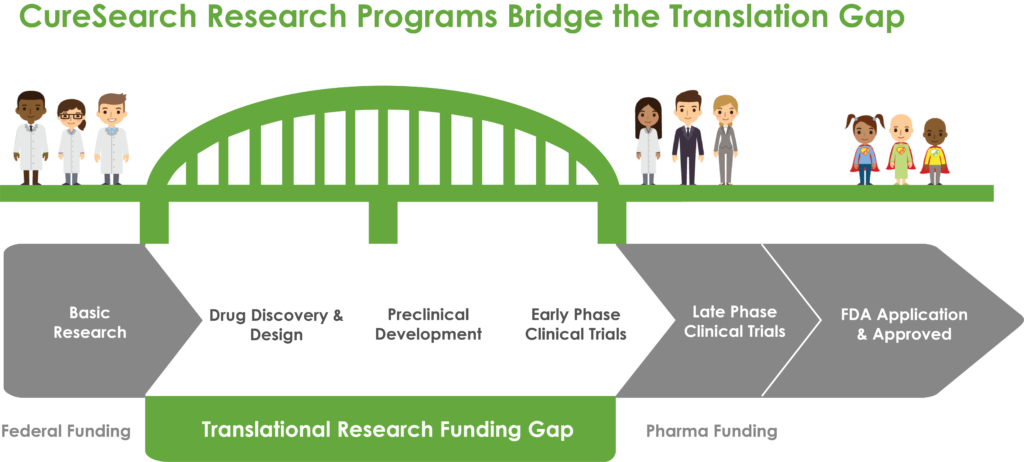
This focus on translational research – bench to bedside – is critical. Limited federal funding generally supports basic or discovery phase research and, on the opposite end of the development timeline, late phase clinical trials are supported by biotech and pharmaceuticals. There is a significant gap in funding for those areas in between, where translational, preclinical, and early-phase clinical trials lie.

CureSearch’s funding efforts aim to fill that gap and ensure that promising new therapies make it into clinical trials. With over 60% of pediatric cancer patients participating in a clinical trial, it’s critical that innovate treatment options are available to them.

Not only are we seeing an increased success rate, but the speed to clinical trials beats the average. We see therapies identified in the lab move into clinical trials in 3.4 years compared to an average of 5.5 years [2]. This speed is essential as we remember that pediatric patients are often receiving decades-old treatments.

CureSearch-funded researcher Dr. Elias Sayour emphasizes this need when he notes, “While funding exists for new discoveries, little to no funding infrastructure is in place for catalysis and development of these discoveries into first-in-human clinical trials. I can think of no other foundation primarily focused on funding the developmental work necessary to bring forward new discoveries into groundbreaking clinical trials.”

These impactful results are thanks to the incredible ongoing support of our generous donors, volunteers, fundraisers, and partners. Together, we truly are making an impact for the kids who are counting on us.


[1] I. W. Mak, N. Evanview and M. Ghert, “Lost in translation: animal models and clinical trials in cancer treatment,” American Journal of Translational Research, vol. 6, no. 2, pp. 114-118, 2014.
[2] H. Matthews, J. Hanison and N. Nirmalan, ““Omics”-Informed Drug and Biomarker Discovery: Opportunities, Challenges and Future Perspectives,” Proteomes, vol. 4, no. 3, p. 28, 2016.

The post Delivering measurable results in the form of new treatment options for children today appeared first on CureSearch for Children's Cancer.

Dr. Brenda Weigel named Chair of CureSearch Scientific Advisory Council

Unknown Reply 08:04

Dr. Brenda Weigel named Chair of CureSearch Scientific Advisory Council 

Brenda Weigel

Bethesda, MD – August 26, 2020 – CureSearch for Children’s Cancer announces that Brenda Weigel, MD, has been appointed as the new chair of the CureSearch Scientific Advisory Council. The Council is comprised of best-in-class pediatric oncologists who set the academic priorities for CureSearch research initiatives and evaluate projects on scientific merit.  

Dr. Weigel is the Director of the Division of Pediatric Hematology/Oncology and is a professor cross-appointed at the University of Minnesota’s Masonic Cancer Center and the Department of Pediatrics. She is also the Co-Director of the Sarcoma Program for the Masonic Cancer Center and medical director of the Masonic Cancer Center Clinical Trials Office. 

“CureSearch is uniquely positioned to break down the barriers and accelerate the pace of drug development for pediatric cancer.” said Dr. Weigel. “I am privileged, honored and excited to be the next council chair and support this expert team of scientific advisors who are united in the goal of delivering new treatment options for the children that need them most.”   

“Dr. Weigel has dedicated her career to the pursuit of innovative therapeutics for pediatric cancer, experience that will be an asset to CureSearch and our focus on drug development,” said Caitlyn Barrett, PhD, National Director of Research & Programs for CureSearch. “Her contributions to groups like the National Cancer Institute and the Children’s Oncology Group will foster essential collaborations between CureSearch and the dedicated scientists driving safer and more effective therapies into clinical trials.” 

The Council is composed of experts from world-renown pediatric cancer research institutions such as the Dana-Farber Cancer Institute, Memorial Sloan Kettering Cancer Center and Children’s Hospital of Los Angeles. The Council also includes representation from the U.S. Food and Drug Administration. 

To learn more about the CureSearch Scientific Advisory Council, visit https://curesearch.org/Advisory-Councils 

______________________________________________________________________________ 

###

About CureSearch 

CureSearch for Children’s Cancer works to end childhood cancer by driving targeted and innovative research with measurable results in an accelerated time frame. CureSearch focuses on advancing the strongest research out of the laboratory and into clinical trials and development, where better, less-toxic treatments can quickly help children. 

For more information, visit curesearch.org, follow CureSearch on Twitter @curesearch or join the conversation on Facebook at facebook.com/curesearch

______________________________________________________________________________ 

Media Contact: Tiffani Copeland 

Senior Vice President, Development & Communications 

CureSearch for Children’s Cancer 

Email: tiffani.copeland@curesearch.org 

The post Dr. Brenda Weigel named Chair of CureSearch Scientific Advisory Council appeared first on CureSearch for Children's Cancer.

CureSearch for Children’s Cancer Announces Board of Directors Additions

Unknown Reply 09:04

Media Contact:
Bailey Singletary
240-235-2204
Bailey.Singletary@curesearch.org

Trent Demulling and David Whan Join CureSearch for Children’s Cancer
Board of Directors

BETHESDA, MD – August 14, 2020 – CureSearch for Children’s Cancer is pleased to announce the appointment of Trent Demulling and David Whan to its Board of Directors, effective immediately. Demulling and Whan join a dedicated team focused on accelerating the pace of drug development for children, adolescents and young adults diagnosed with cancer.

Trent Demulling

Demulling, who will serve as Board Treasurer, is the Senior Vice President and Chief Financial Officer at Kiewit Corporation, one of the largest and most respected construction and engineering organizations in North America. Before joining Kiewit, Demulling held leadership positions at KPMG LLP and PricewaterhouseCoopers LLP.

Whan most recently served as Vice President, Chief Human Resources Officer for TopBuild Corporation. Previously, he was Director, Global Talent Development and HR Strategy for Deere & Company. Over twenty years at Deere, he held multiple global human resources positions, overseeing strategy, policy, governance, and industrial relations. Today, Whan advises CEOs, boards and other executives on human resources topics.

David Whan

“We’re thrilled to add these two experts in their fields to our world class leadership team including our board, advisory councils and committees,” said Kay Koehler, CureSearch President & CEO. “This extraordinary level of volunteer leadership will propel us forward to make the greatest impact for children with cancer.”

“Trent and David bring decades of diverse executive and philanthropic experience to the organization. Their strong sense of community, professional connections and wide spheres of influence will no doubt greatly benefit the families we serve,” said Hank Adams, Executive Vice President for Kiewit Infrastructure Group and Chair of the CureSearch Board Nominating Committee.

CureSearch Directors provide outstanding executive leadership, experience and expertise from the areas of business, finance, medical research, and more. Many directors have experienced childhood cancer in their own families or with close friends, and they understand the challenges facing patients and families today.

To learn more about CureSearch’s Board of Directors, visit curesearch.org/Board-of-Directors.

###

About CureSearch for Children’s Cancer
CureSearch for Children’s Cancer, a national nonprofit organization based in Bethesda, Md., works to end childhood cancer by driving targeted and innovative research with measurable results in an accelerated time frame. CureSearch focuses on advancing the strongest research out the laboratory and into clinical trials and development, where better, less-toxic treatments can quickly help children. To learn more visit curesearch.org.

Want more stories like this?

Get emails that matter, when it matters.

Please leave this field empty

The post CureSearch for Children’s Cancer Announces Board of Directors Additions appeared first on CureSearch for Children's Cancer.

Jared Brancazio named new Chairman of the Board for CureSearch, aims to drive forward new treatments via collaboration and innovation

Unknown Reply 07:04

This month, Jared Brancazio takes the reins as CureSearch’s Chairman of the Board, bringing to the role a strategic vision centered on collaboration, innovation, and the importance of strong, diverse volunteer leadership. Brancazio, himself a cancer survivor, previously served as Board Treasurer. 
 
“This is a significant moment in the history of our organization said Brancazio. “We’re truly poised to transform the way childhood cancer research is approached and prioritized, and we’re making progress every day.”  

“We’re thrilled to welcome Mr. Brancazio as our new Chairman of the Board,” said Kay Koehler, CureSearch President & CEO. “His wealth of experience in both the corporate and non-profit sectors is an asset to our organization, and he innately understands the importance of relationship building and volunteer leadership in driving our mission forward.” 

Currently VP, Investments at Brancazio Wealth Management of Raymond James, Brancazio has spent more than 20 years in high level finance and investment roles and has also served in key volunteer leadership roles at organizations including the Leukemia & Lymphoma Society, Florida Cancer Specialists Foundation and Florida Southwestern State College Foundation.  

Dr. Stuart Siegel, who served previously as Chairman, has been named Chair Emeritus, honoring his leadership and lasting impact. In this role, he’ll continue to support CureSearch by providing historical knowledge and expertise to new board leadership and acting as an ambassador for the organization.  

“Dr. Siegel helped transform us into an organization singularly focused on driving research that will impact children, now,” said Koehler. “Through it all, he inspired us with the stories of children who counted on us then, and count on us today.” 

Building upon the work and successes of the last decade, Brancazio looks to create a lasting impact by creating new partnerships with like-minded organizations, expanding innovative initiatives such as the CureSearch IMPACT Series, and collaborating with academic and industry leaders. 

“I’m deeply honored to have the opportunity to serve childhood cancer patients and families as the new chairman,” said Brancazio. “I look forward to leading us into the next phase of our work alongside my fellow directors, our unparalleled Scientific and Industry Advisory Councils, and our, dedicated staff.” 

 _______________________________________

CureSearch directors provide outstanding executive leadership, experience, and expertise from the areas of business, finance, medical research, and more. Many directors have experienced childhood cancer in their own families or with close friends, and they understand the challenges facing patients and families today. To learn more about our board, visit: curesearch.org/board-of-directors


Mr. Brancazio, himself a cancer survivor, previously served asBoard Treasurer._______________________________________CureSearch directors provide outstanding executive leadership, experience,and expertise from the areas of business, finance, medical research, and more. Many directors have experienced childhood cancer in their own families or with close friends, and they understand the challenges facing patients and families today.To learn more about our board, visit: curesearch.org/board-of-directors (page to be update

The post Jared Brancazio named new Chairman of the Board for CureSearch, aims to drive forward new treatments via collaboration and innovation appeared first on CureSearch for Children's Cancer.

Driving Childhood Cancer Treatments Forward: Announcing a New Partnership with FasterCures & Children’s Tumor Foundation

Unknown Reply 14:04

Today, we announce a new partnership with FasterCures, a center of the Milken Institute, and the Children’s Tumor Foundation to identify deprioritized drugs that could benefit pediatric patients, and to create a new pediatric-focused pathway for development.   

As an organization committed to accelerating the development of new childhood cancer treatments, we know that smarter research funding is just one part of the solution; long-term success will require a seismic shift to the drug development process and landscape. This change will require strategic collaboration and outside the box thinking. With your support, we’re leading the way. 

“Drugs can be deprioritized by biopharmaceutical companies for a variety of strategic or commercial reasons and that can lead to missed opportunities for children with cancer,” said Kay Koehler, President & CEO of CureSearch. “This initiative will enable us to identify those opportunities and match them with development expertise and financial support to ensure that promising therapies are expedited to the children who are counting on us.” 

The partnership will utilize CureSearch’s relationships with key pediatric advocates within the pharmaceutical industry, including our Industry Advisory Council, to identify previously discontinued drugs as well as those that are likely to be deprioritized soon. These programs have already met certain milestones and are further along the drug development pipeline. 

“Leveraging our strong relationships with pediatric advocates within industry and our ability to convene the right players, we’ll work collaboratively with companies as they start to phase out adult drug programs and shift that momentum into pediatric development,” added Kelli Wright, National Director, Strategic Initiatives at CureSearch.  

This partnership is the first under FasterCures’ BRIDGE initiative launched in 2019 with a mission to enable more dynamic marketplaces for biomedical innovation.  

The organizations will be advised on a voluntary basis by leaders in the pediatric space, including:   

  • D. Wade Clapp, M.D., Richard L. Schreiner Professor and Chairman, Department of Pediatrics at the Indiana University School of Medicine and Physician-in-Chief for Riley Hospital for Children 
  • Elizabeth Fox, M.D., Senior Vice President, Clinical Trials Research at St. Jude Children’s Research Hospital 
  • Kevin Grimes, M.D., Co-director of the SPARK Translational Research Program and Professor of Chemical and Systems Biology, Stanford University School of Medicine 
  • Chris Lee, Managing Director, Strategic Growth at Palladium and member of CureSearch Strategic Oversight Committee 
  • Freda Lewis-Hall, M.D., Board Member of FasterCures and former Chief Patient Officer and Chief Medical Officer at Pfizer 
  • Baiju Shah, Senior Advisor to FasterCures and former CEO of BioMotiv  
  • Kathy Wanner, Board Member of CureSearch and a Partner at Fairway Capital Management 
  • Brigitte Widemann, M.D., Chief of the Pediatric Oncology Branch at the National Cancer Institute.  

Pharmaceutical representatives can contact Kelli Wright, National Director of Strategic Initiatives, for more information: kelli.wright@curesearch.org or (240) 235-2217. 

Read more about this exciting new partnership here

The post Driving Childhood Cancer Treatments Forward: Announcing a New Partnership with FasterCures & Children’s Tumor Foundation appeared first on CureSearch for Children's Cancer.

CureSearch Research Addresses Critical Unmet Need For Safe, Effective Pediatric Brain Cancer Treatments

Unknown Reply 14:04

CureSearch Research Funding Drives
New Brain Cancer Treatments

May is National Brain Tumor Awareness Month, highlighting a critical topic in the childhood cancer community as brain cancers account for 25% of all childhood and adolescent cancer diagnoses.

Brain tumor types include medulloblastoma (the most common), high- and low-grade glioma, Primitive Neuro-Ectodermal Tumor (PNET), and ependymoma. At CureSearch, we’re dedicated to supporting families affected by brain cancer and to funding the most promising research to address a lack of effective treatments for many tumor types.  

With advances in treatment for many central nervous system (brain and spinal cord) tumors, overall survival has increased to nearly 75%. However, for many types of brain cancer, treatment options remain inadequate and, in some cases, nonexistent. Even with successful treatment, the vast majority of children who survive will experience serious side effects in adulthood due to their treatment.

“The lack of safe and effective treatments for mosttypesof pediatric brain tumor is unacceptableand addressing this type of critical unmet need isacentral focus of our research strategy,” said Dr. Caitlyn Barrett, CureSearch National Director of Research & Programs. “In fact, through our CureSearch Catapult Awards, we’re currently funding three clinical trials testing potentially groundbreakingnew pediatric brain cancer treatmentsat institutions across the county.”  

CureSearch-funded brain cancer research projects include: 

  • Dr. Ranjit Bindra is conducting a phase 1 clinical trial testing a new treatment for pediatric glioma that could significantly improve long-term survival rates for this aggressive brain cancer. 
  • Dr. Crystal Mackall’s clinical trial will test a promising new CAR T-cell therapy for DIPG, a devasting brain tumor in children that has a 5-year survival rate of less than 1%. 
  • Earlier this year, we committed $2.5 million in support of Dr. Elias Sayour’s first-in-human, phase I/II clinical trial testing an innovative personalized immunotherapy for pediatric high-grade gliomas, the primary cause of death in children with brain tumors. 
  • This National Brain Tumor Awareness month, we thank the researchers, donors, volunteers and patient families who, together, are making an impact for over 4,000 children diagnosed with a brain cancer each year. 

    A resource for families and caregivers, our website contains a wealth of information about brain tumors in children, including types of brain tumors, symptoms, diagnosis, treatment and life after treatment. Learn more by clicking here.

    CureSearch is committed to driving the strongest research and delivering treatments to children, faster. Get involved or give today so children can live longer, healthier lives tomorrow. Donate Now

    Want more stories like this?

    Get emails that matter, when it matters. Please leave this field empty

    The post CureSearch Research Addresses Critical Unmet Need For Safe, Effective Pediatric Brain Cancer Treatments appeared first on CureSearch for Children's Cancer.

    Challenge 43

    Unknown Reply 08:31

    43 Miles in 43 Days for the 43 Children Diagnosed Each Day

    Challenge 43, CureSearch’s new virtual event, unites families, friends, and athletes from across the nation when we can’t all be together in person! Starting May 19, 2020 we will take on a 43 day, 43 mile challenge where every step brings us closer to cures for children’s cancer! 

    “This challenge came at the perfect time because I have been in the house too long and it’s time to get moving!” said author and CureSearch supporter, Jennifer Smith. The Florida-based author also emphasized the importance of this fun and innovative alternative to in-person walks with the reminder “more money need to be directed to childhood cancer research to find better safer treatments.”  

    Choose your own adventure! You can run, walk, hike, or even multi-task and watch your favorite movie on a cardio machine – any method of logging miles works. Be sure to join us for our virtual kickoff party on May 18th and start your challenge! We’ll provide fun and inspiration over the 43 days and celebrate your accomplishments at our virtual finish line on June 30. Submit your final results to receive your finisher’s shirt, medal, and any prizes you’ve picked up along the way.

    Challenge 43 can also be a jumping off point for you own personal challenge! Inspire yourself to be the fastest finisher or log the most “extra miles for cures!” If you’re missing the camaraderie of your gym or running group, invite your running buddies, hiking club, extended family or high school track team to complete the miles together virtually. Want to get the kids moving? Take on this challenge as a family to stay active and give back together!

    Interested in becoming a part of Challenge 43? Visit us here for more information, or contact brecka.putnam@curesearch.org.


    Want more stories like this?

    Get emails that matter, when it matters.

    Please leave this field empty

    The post Challenge 43 appeared first on CureSearch for Children's Cancer.

    Let’s come together today for the kids who need us

    Unknown Reply 16:09

    Dear CureSearch Supporter,

    Today is #GivingTuesdayNow, a global day of giving and an opportunity for all of us to come together in support of the causes that are closest to our hearts. As the father of a childhood cancer survivor and a member of the CureSearch Board of Directors, I invite you to participate in this special day in support of CureSearch and childhood cancer families everywhere.

    While the COVID-19 virus has altered so many aspects of our everyday lives, one area that remains unchanged is the desperate need to find cures and treatments for children diagnosed with cancer.  While the world is justifiably consumed with COVID-19 issues, 43 children are still being diagnosed with cancer every day. 

    Cancer doesn’t care that COVID-19 has taken over our headlines; cancer is relentless in its efforts to consume our children’s lives. But just as cancer is relentless, we too, as parents, grandparents, and as a caring and compassionate society, must also be relentless in continuing to seek the cures and treatments that can end the scourge of pediatric cancer.

    When my daughter, Amy, was diagnosed with leukemia in 1996 at age 15, I opened an old cancer textbook and the section on leukemia began with these ominous words: “Leukemia is an almost always fatal blood disease.” Fortunately, progress had already been made and despite the pneumonias, fevers as high as 106.6, surgeries and stroke, Amy weathered it all to become the woman she is today.

    Today, that same textbook likely begins with the statement: “Leukemia is a blood disease with survival rates of over 90% for some types.” That is the result of research that is only made possible by the support of so many of us around the world. Now, we have the opportunity to make sure treatments for all types of childhood cancer progress in the same way.  Our kids are counting on us.  

    We must not allow COVID-19 to alter our steadfast resolve to eradicate pediatric cancer.  Research must continue and our support is even more meaningful today, as children face the ordeal of dealing with pediatric cancer in a world consumed by COVID-19.

    I hope that you’ll join me in supporting CureSearch this #GivingTuesdayNow. We can all make a difference in our own way, whether it is by making a donation, volunteering, or sharing our stories. Even in challenging times, I know that together we can deliver new and better treatments for the 43 children diagnosed with cancer each day and for the many thousands who are living through their cancer ordeal and who must face life and death challenges at far too young an age.

    With hope and gratitude,

    Father, Advocate & CureSearch Board Member

    The post Let’s come together today for the kids who need us appeared first on CureSearch for Children's Cancer.

    National Volunteer Week Spotlight: Industry Advisory Council champions pediatric drug development from within

    Unknown Reply 06:51

    As we work to find new and less-toxic treatments for pediatric cancers, we know that smarter research funding is just one part of the solution. Long-term solutions require a seismic shift in the existing pediatric drug development process. This change demands the strategic collaboration of all the players in the pediatric cancer ecosystem, including science, academia, regulatory, funding and, importantly, pharmaceutical industry leaders. 

    One of the unique ways we ensure all critical voices are heard is through our Industry Advisory Council (IAC). This distinctive 15-member panel of volunteer leaders from global pharmaceutical and biotechnology companies and clinical research organizations champion CureSearch and pediatric cancer programs within the drug development industry. IAC members also review potential research projects, offering unique insight and guidance around the needs and potential pitfalls emerging treatments might face in the drug development process.

     “As the drug makers, the members of the Industry Advisory Council are a vital part of the conversation – their input, perspective and guidance strengthens our laser focus on drug development,” said Kelli Wright, CureSearch National Director of Strategic Initiatives. “Just like doctors and nurses on the front line in the hospital, our IAC members are the people fighting for our kids within the industry. We would be even further behind in finding new drugs for kids without them.”

    We are grateful to our IAC members for their leadership and passion as they work to accelerate the pace of pediatric drug development. This National Volunteer Week, we’re proud to spotlight two incredible IAC members, Dr. Elly Barry and Dr. Jeffrey Skolnik, both pediatric oncologists by training who now, in industry, bring their critical perspectives directly into the drug development process.

    Elly Barry, MD MSScSenior Medical Director, Global Clinical Lead for Pediatric Oncology and Xtandi, Pfizer, Inc.

    “I oversee the development of our drugs for pediatric oncology indications. I get to work across our entire drug portfolio to determine which drugs have the most promise in children with cancer, and to work with the academic research and regulatory communities to bring these studies and treatments to pediatric patients,” said Dr. Barry. 

    “CureSearch helps to bring relevant stakeholders together to discuss the barriers that exist in pediatric oncology drug development, and come up with potential solutions. It is important for industry to engage the academic research and patient advocacy community to understand where the areas of greatest need are, and to learn how we can work together to bring our drugs to the patients who need them most.”

    Jeffrey Skolnik, MD, Vice President, Clinical Development, Inovio Pharmaceuticals

    “Working in the clinic, I had the opportunity to influence one child at a time. In the industry, I have the chance to help scores of children at once. We get too few new drugs to children with cancer, in too long a time, and it is my job to make sure we bring novel, promising medicines to kids with cancer as fast as we can, safely and ethically,” said Dr. Skolnik. 

    “The first step in bringing new medicines to children with cancer is to bridge the unnecessary divide between major pharmaceutical companies and pediatric oncology academics,” he said. “What I hope is that in the near future, children with cancer are treated with the same respect, attention, expediency, and most importantly, promising medicines with which their adult colleagues are currently treated, and given the same priority from our industry with respect to the importance of cure.

    Thank you to Dr. Barry, Dr. Skolnik, and the entire CureSearch Industry Advisory Council for your leadership and dedication to accelerating the pace of pediatric drug development!

    _________

    IAC members include leaders from pharmaceutical companies including Jazz Pharmaceuticals, Novartis and Bayer, biotechs including Day One Biopharmaceuticals, and clinical research organizations including PRA Health Services. To learn more about our IAC members, click here.

    The post National Volunteer Week Spotlight: Industry Advisory Council champions pediatric drug development from within appeared first on CureSearch for Children's Cancer.

    With Gratitude this National Volunteer Week

    Unknown Reply 18:23

    As we kick off this National Volunteer Week in the midst of the global coronavirus outbreak, we have an enhanced appreciation of how interconnected we are, and how each of our actions can affect the lives of countless others.

    It takes an army of dedicated and resourceful volunteers, each making a unique and important contribution, to support our efforts to fund new treatments and cures for childhood cancers. Now, more than ever, we want to express our deep appreciation for our volunteers and celebrate the impact of their selfless service in advancing childhood cancer research.

    Some are inspired to action when a family member or friend is diagnosed with childhood cancer. Others have dedicated their professional lives to discovering new and more effective drugs in academia and industry. So many come together to organize and participate in community and athletic events to raise awareness and critical funds.

    For more than 30 years, CureSearch has been a driving force in childhood cancer research. The progress we’re making is only possible because of the passion and commitment of our volunteers, advocates and donors. You are the foundation of all that we do, and together, we’re changing the odds for the children who are counting on us.

    With Gratitude,

    Kay Koehler
    Kay Koehler
    President & CEO
    CureSearch for Children’s Cancer

    P.S. Be sure to follow us on social media where we’ll be highlighting some of our amazing volunteers throughout the week!

    Want more stories like this?

    Get emails that matter, when it matters.

    Please leave this field empty

    The post With Gratitude this National Volunteer Week appeared first on CureSearch for Children's Cancer.

    COVID-19 Impact and Action

    Unknown Reply 14:35

    To the CureSearch Community:

    Like you, we’re closely monitoring the current situation surrounding the coronavirus (COVID-19) and following national and local recommendations for precautionary measures, travel and community gatherings. We also recognize that many of us interact with immune-compromised children on a daily basis and that it’s important to exercise an abundance of caution. 

    With the safety of our patient families, volunteers and staff top of mind, we have made the decision to postpone all events scheduled between now and May 8th, including our annual CureSearch Summit and our Lone Star and Foothills Ultimate Hike events. Anyone impacted by these changes will receive additional updates directly over the coming days and weeks. We hope that you’ll continue to participate in and support these important events; they are critical in our ability to drive our mission forward.

    We’ll continue to monitor the situation both nationally and locally and are creating contingency plans, if needed, for all other upcoming events. Updates will follow. If you are planning to host your own event in the coming weeks, please take all necessary precautions to ensure the safety of your event participants and adhere to your local public health department and CDC recommendations.

    We encourage everyone to follow CDC guidelines to help lower risk of infection, including limiting close social contact, staying home when sick, frequent hand washing and avoiding touching your eyes, nose or mouth. If you are a childhood cancer patient family, please stay in touch with your home (treating) institution and treating team for additional information. Your hospital’s website should have the most up-to-date information.

    We’re grateful to our entire community for their support, patience and flexibility during this time as we take all precautions to ensure the safety of our participants, volunteers and staff. Despite the challenges we face, it’s important to remember that our kids can’t wait for new, better cancer treatments.That’s why we’ll continue to raise funds, support new research, and drive critical collaborations to accelerate the pace of pediatric drug development. We can’t do it without you. Thank you for your continued commitment and support.

    Sincerely,

    Kay Koehler
    President & CEO
    CureSearch for Children’s Cancer

    For the most up to date information on COVID-19, visit the CDC website here: https://www.cdc.gov/coronavirus/2019-nCoV/index.html

    The post COVID-19 Impact and Action appeared first on CureSearch for Children's Cancer.

    Volunteer Spotlight: Ultimate Hiker raises over $113,000 for children’s cancer research

    Unknown Reply 06:56

    Frank Gioscia, 68, is training for his tenth CureSearch Hike while raising $113,000 for children’s cancer research! He has done it by lacing up his hiking boots and hitting the trails at CureSearch Ultimate Hike events.

    “It was easy for me to get involved with CureSearch. In July 2011, a friend handed me a flyer about the Ultimate Hike. I went to a meeting and the rest is history,” Frank shared. Shortly after he got started, the young son of a family friend was diagnosed with cancer. He was just 6 years old. “I’ve been hiking for Gavin for years. Thankfully, he has been remission for 5 years now. The truth is, I hike for all children with cancer.” 

    This will be Frank’s tenth year hiking to help fund cutting-edge childhood cancer research. For the first three years, he trekked the Foothills Trail in South Carolina. Then he went on to master the Tecumseh Trail in Indiana for 6 years. In 2020, he plans to return to South Carolina to tackle the Southeast Ultimate Hike on the Foothills Trail.  

    “I keep coming back because it is such a great cause. It is life changing for me. You don’t know how blessed you are until you see what these families are going through. I have two children and grandchildren. With CureSearch, I can give back to families who need it.”

    The 68-year-old stays in prime shape through his passion of hiking which he does year-round in the Great Smokey Mountains National Park, which is less than an hour from his home. “With CureSearch, my hiking took on new meaning. As I finish an Ultimate Hike, I see all of the pictures of the kids who are fighting cancer and those who lost their battle. I am so thankful that I can do this for them. It is the most rewarding thing I have ever done.” 

    CureSearch Ultimate Hikes take place on iconic trails across the country to raise funds for the most promising children’s cancer research. Learn more.


    For 30 years, CureSearch for Children’s Cancer has worked tirelessly to accelerate the development of more effective, less-toxic children’s cancer treatments. Learn more about the progress we are making thanks to the incredible support of volunteers and advocates like FrankGioscia.

    Want more stories like this?

    Get emails that matter, when it matters.

    Please leave this field empty

    The post Volunteer Spotlight: Ultimate Hiker raises over $113,000 for children’s cancer research appeared first on CureSearch for Children's Cancer.

    Subscribe Our Newsletter

    Colaboradores

    Arquivo do blog

    Tecnologia do Blogger.

    Search

    Most Complete Tools & Resources

    Most Complete Bloggers, Freelancers & Youtubers Tools and Resources

    How To Start a Blog Guide

    How to Start a Blog in 3 minutes banner

    Professional Email Marketing

    Email Marketing for Professional Bloggers

    Build Your Online Store

    Shopio Build Online Store

    Start your own Consultation business

    Insta Consultant Toolkit

    Follow us on Pinterest

    Follow me on Pinterest