AdvCash Master Card 0 fee

CureSearch, Mattel celebrate 10 years of Brave Barbie  

Unknown Reply 07:04

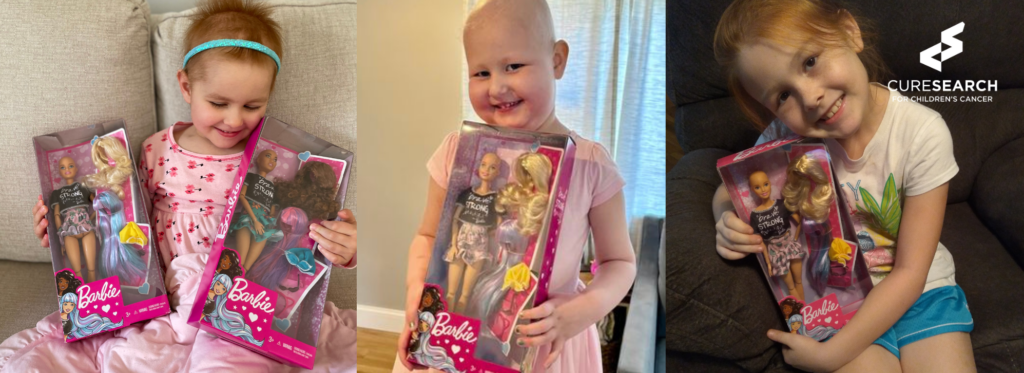
Brave Barbie doll provides a friend through treatment for kids with cancer 

Bethesda, Md. – October 23, 2023 – CureSearch for Children’s Cancer and Mattel are celebrating 10 years of Brave Barbie – a special Barbie created to bring hope and comfort to courageous young patients battling illness or receiving treatments that cause hair loss. 

To help kids better understand and cope with hair loss, CureSearch and Mattel partnered to develop and distribute a Barbie that represents the young fighters undergoing cancer treatment.  

“Brave Barbie is given to children that are going through difficult cancer treatments so that they can see themselves and feel comforted that they’re not going through this alone,” said Nancy Molenda, Executive Director of Mattel Children’s Foundation and Corporate Philanthropy. 

CureSearch is a national nonprofit dedicated to ensuring that every child diagnosed with cancer has a safe and effective treatment option and funds research with the greatest potential to reach clinical trials.  

“When children go through cancer treatments, the toxicity from their treatment causes lifelong side effects,” said Kay Koehler, President and CEO of CureSearch. “They can become blind or deaf, and there’s always a risk of secondary cancer or heart failure just as they’re graduating from high school, or beginning to start their new life.” 

Brave Barbies have been donated to more than 200 hospitals across the country, with over 100,000 donated, free of charge, directly to children impacted by cancer.  

“When Chloe got her doll in the mail, there was a moment of joy when she saw that the doll looked like her,” said Krystle Kincade-Crean, whose daughter Chloe was diagnosed with leukemia in 2022. “I’m really happy that Brave Barbie can show Chloe that bald is beautiful and hair doesn’t define her.” 

Brave Barbies can be requested for free in the United States: curesearch.org/brave-barbie. 

WATCH: Leaders from CureSearch and Mattel, and childhood cancer advocates discuss the impact of Brave Barbie 

About CureSearch: For more than 35 years, CureSearch for Children’s Cancer has been a driving force in pediatric cancer research, working to ensure that every child diagnosed with cancer has a safe and effective treatment option. Our unique funding model is laser focused on accelerating the development of new therapies in areas of high unmet need; we only fund translational research projects with the strongest potential to become a new treatment and quickly reach patients. Together, we save lives faster. To learn more visit curesearch.org.   

About Mattel: Mattel is a leading global toy company and owner of one of the strongest catalogs of children’s and family entertainment franchises in the world. We create innovative products and experiences that inspire, entertain, and develop children through play. We engage consumers through our portfolio of iconic brands, including Barbie®, Hot Wheels®, Fisher-Price®, American Girl®, Thomas & Friends®, UNO®, and MEGA®, as well as other popular intellectual properties that we own or license in partnership with global entertainment companies. Our offerings include film and television content, gaming and digital experiences, music, and live events. We operate in 35 locations and our products are available in more than 150 countries in collaboration with the world’s leading retail and ecommerce companies. Since its founding in 1945, Mattel is proud to be a trusted partner in empowering children to explore the wonder of childhood and reach their full potential. Visit us online at mattel.com

The post CureSearch, Mattel celebrate 10 years of Brave Barbie   appeared first on CureSearch for Children's Cancer.
The post CureSearch, Mattel celebrate 10 years of Brave Barbie   appeared first on CureSearch for Children's Cancer.

Holly Springs restaurant raises $37,000 for children’s cancer research 

Unknown Reply 08:03

Monthly Supper Club supports CureSearch for Children’s Cancer 

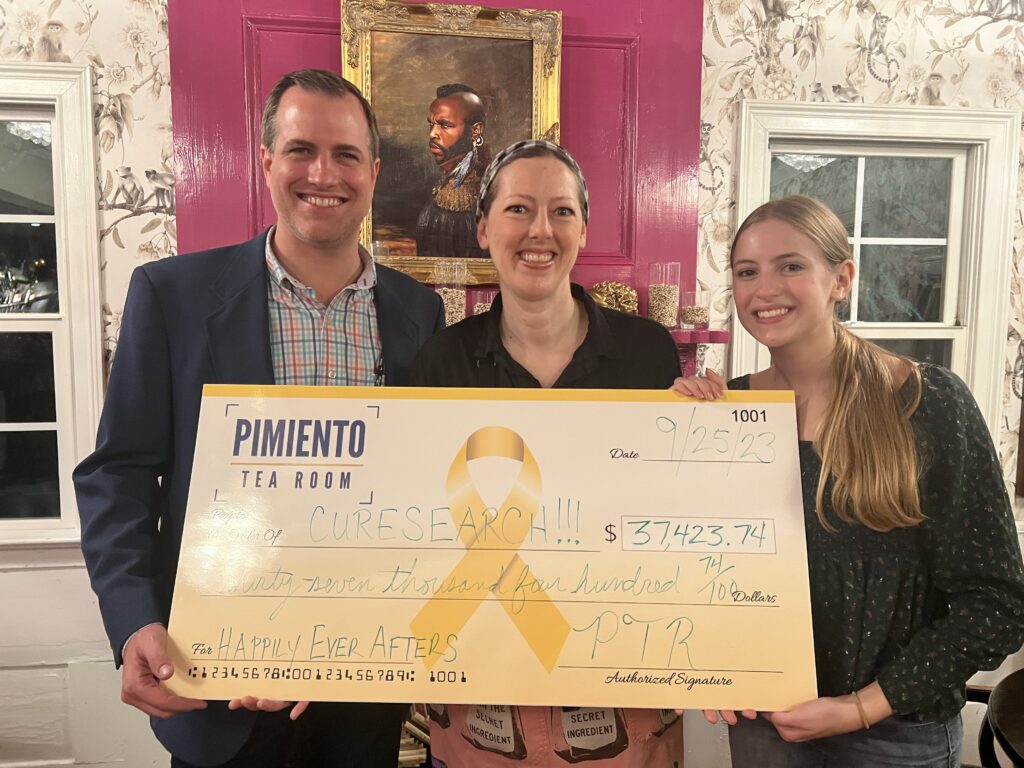
Holly Springs, N.C. – September 28, 2023 – Pimiento Tea Room, a unique tea house and restaurant in downtown Holly Springs, has raised more than $37,000 this year for CureSearch for Children’s Cancer, supporting pediatric cancer research.  

In 2020, Matt and Christy Griffith transformed a historic 180-year-old farmhouse into the Holly Springs’ award-winning Pimiento Tea Room. Shortly after opening, the couple launched the monthly Supper Club, a seven-course event that features adventurous cuisine with a Southern twist. Proceeds are donated to CureSearch to help fund lifesaving research. 

The couple presented the check on September 25th to commemorate Childhood Cancer Awareness Month, a month very special to the Griffith family.  

“Our youngest child, Eve, was diagnosed with anaplastic bilateral Wilms Tumor in 2009 when she was two years old. That was the worst day of our lives,” said Christy. “When you hear the word cancer, but don’t yet have a plan, it’s easy to feel helpless and imagine the most unfavorable outcome.” 

Eve is now cancer free and like so many childhood cancer survivors, she is at risk for lifelong side effects from treatment. CureSearch is dedicated to ensuring every child with cancer has a safe and effective treatment option, and the chance to live a long, healthy life. 

“The industry average for preclinical research moving into clinical trials is 8%. CureSearch has seen 60% of their funded pre-clinical research projects move into clinical trials within the last 10 year, said Chris Morton, chair of the CureSearch Community Leadership Board in the Triangle Area. “And their projects make it to clinical trials 1.5 times faster than the national average. That speed is critical for kids now facing cancers with limited treatment options.”  

CureSearch hosts multiple events across the country to raise funds for children’s cancer research, such as the Foothills Spring Ultimate Hike on April 20, 2024. This life-changing adventure gives hikers and supporters the chance to hike the Foothills Trail in South Carolina, while honoring and supporting children with cancer. To register, visit ultimatehike.org/foothills

The post Holly Springs restaurant raises $37,000 for children’s cancer research  appeared first on CureSearch for Children's Cancer.

The post Holly Springs restaurant raises $37,000 for children’s cancer research  appeared first on CureSearch for Children's Cancer.
Fighting Childhood Cancer: Advancing Pediatric Clinical Trials 

Unknown Reply 07:03

By Holly R. Zink, MSA, ACRP 

Cancer in children differs from cancer in adults, from DNA alterations to tumor origin. More than 15,000 children are diagnosed with cancer each year in the U.S., and while new treatments — most often designed originally for adults — have increased overall survival rates, children often face longer, more intense treatment schedules. The need for tailored treatments is crucial.  

Clinical trials connect more patients to new therapies, saving more lives 

Current standard therapies for many childhood cancers are over 30 years old and have lifelong, toxic, and debilitating side effects. Treatment-related toxicities lead to secondary cancers, organ damage, early onset heart failure, and cognitive and growth deficits that undermine their future health, happiness, and longevity. 

Despite this, pediatric clinical trials lag behind adult trials by an average of 6.5 years, leading to countless child casualties. Urgent action is needed. 

Translational research is not always making it into the clinic 

When it comes to research, a serious and detrimental funding gap exists in the “valley of death,” wherein new research discoveries fail to actually progress the clinic. It’s critical that good research is backed by the funding it needs in order to advance to  translational, preclinical, and early-phase clinical trials. This is why CureSearch is so laser-focused on funding promising, translational research with the greatest potential of becoming new treatments for kids with cancer. 

“People talk about survival rates for childhood cancer, but no one talks about what these children go through and the late effects and impact of their treatment,” said Kay Koehler, President and CEO of CureSearch. “Nonprofits are really all that we have to ensure that children can lead a long and healthy life.” 

Cutting-edge pediatric clinical trials bring hope to children who are otherwise out of options 

CureSearch is currently funding a Phase I clinical trial led by Drs. David Munn and Theodore Johnson. Their team is uncovering new ways to combat chemoimmunotherapy resistance in brain cancer patients aged 12-25, offering hope for those with limited options. The team’s trial design is highly innovative, exploring combination therapies’ efficacy in a single-arm Phase I design, leveraging their unique patient population. If this trial is successful, it could revolutionize treatment options for children with brain cancer. 

How can targeted funding advance research more rapidly?  

CureSearch focuses on funding projects with the potential to reach clinical trials within three years. CureSearch-funded research is extensively reviewed by our scientific and industry advisory councils, who collaborate to identify and overcome obstacles, resulting in a 7x higher rate of preclinical projects advancing to clinical trials. This means our funded preclinical projects move to the clinic 1.5x faster than the national average.  

This singular focus is critical in driving cutting-edge research out of the lab and into the clinic, providing new, safer treatments to the children who are counting on us. 

Support next-generation research today and help ensure that every child has a chance to live a long, healthy life. 

The post Fighting Childhood Cancer: Advancing Pediatric Clinical Trials  appeared first on CureSearch for Children's Cancer.

The post Fighting Childhood Cancer: Advancing Pediatric Clinical Trials  appeared first on CureSearch for Children's Cancer.
Childhood Cancer Awareness Month Partner Toolkit 

Unknown Reply 09:05

Share on social media 

Our Childhood Cancer Awareness Month (CCAM) Partner Toolkit contains social media posts and graphics, including a CCAM cover photo for Facebook and LinkedIn. Adding this cover photo to your page is a quick and easy way to show your support of CureSearch and children with cancer.

Additionally, we encourage you to share content directly from the CureSearch social media channels. Hitting that share button on posts helps to build our page followers and boost our post visibility. Follow us on Facebook, Instagram, LinkedIn and Twitter! 

Engage your partners, colleagues 

The toolkit also includes CureSearch overview flyers, explaining our mission and the impact of supporting CureSearch; and a corporate flyer outlining the various ways a company and its employees can get involved and raise awareness during CCAM. Feel free to use the CCAM email template when reaching out to your contacts. 

These are great materials to share with current or potential partners and encourage them to join us in making an impact during CCAM. 

The post Childhood Cancer Awareness Month Partner Toolkit  appeared first on CureSearch for Children's Cancer.

The post Childhood Cancer Awareness Month Partner Toolkit  appeared first on CureSearch for Children's Cancer.
Research Blog: Seeking a More Effective Treatment for Osteosarcoma  

Unknown Reply 08:03

A closer look at Dr. VanHeyst’s osteosarcoma study 

The current standard treatment for osteosarcoma, a bone cancer, hasn’t changed much in decades. The chemotherapy that osteosarcoma patients receive is harsh, and the side effects are only magnified in children. Osteosarcoma is an aggressive cancer, and for patients with metastasis – cancer that has spread to other parts of the body – survival outcomes remain especially grim. 

With funding from her CureSearch award, Dr. Kristen VanHeyst is exploring a new treatment, called immunotherapy, for osteosarcoma. Immunotherapy has recently shown promise in other types of cancer, although it hasn’t been very effective for osteosarcoma so far. Research like that of Dr. VanHeyst and team is critical in cracking the code and eventually delivering a safer, more effective treatment for osteosarcoma patients. 

An Innovative Approach: Targeting an immune suppressive molecule 

Dr. VanHeyst’s team is focusing on a molecule called Transforming Growth Factor-Beta (TGF-ß), which is produced in tumors. This molecule makes the tumor grow and makes it harder for the patient’s immune system to fight against it. 

Dr. VanHeyst wants to target TGF-ß, using the drug Vactosertib, to slow tumor growth and help the immune system fight against the cancer. She and her colleagues have demonstrated that the drug can slow down the growth of cancer in mice with weak immune systems. However, complete disease control has not yet been achieved. Dr. VanHeyst hypothesizes that combining the drug with another type of treatment, called an immune checkpoint blockade, might work better.  

The immune checkpoint blockade is a special treatment that helps our immune system fight cancer by blocking signals that cancer cells use to hide. When these signals are blocked, our immune system becomes better at finding and attacking the cancer cells. It’s like taking off a disguise that the cancer cells wear, so our immune system can see them clearly and fight them off. This type of treatment has been helpful in some other types of cancers, and many scientists have recently been studying it more in order to understand how it can be used to help even more patients. 

Dr. VanHeyst will also lead a clinical trial to test the treatment plan on children with osteosarcoma. The team is working with a pharmaceutical company, called MedPacto, Inc., to develop the trial. They will start by testing Vactosertib alone to ensure it is safe and effective. If it looks promising, they will then try combining it with the immune checkpoint blockade. They will closely study the patients’ response to the treatment with the goal of improving survival rates. They will also collect samples from the patients to study their genes and proteins to better understand how the treatment is working. Dr. VanHeyst is working to ultimately lower the age limit for enrollment in clinical trials, and give more pediatric patients access to novel therapeutic options. 

Ultimately, the researchers hope that the drug Vactosertib, either alone or in combination with another drug, will provide a more hopeful outlook for patients with osteosarcoma. These types of learnings can be pivotal in driving breakthroughs in cancer treatment, now and in the future. 

The post Research Blog: Seeking a More Effective Treatment for Osteosarcoma   appeared first on CureSearch for Children's Cancer.
The post Research Blog: Seeking a More Effective Treatment for Osteosarcoma   appeared first on CureSearch for Children's Cancer.
Research blog: Uncovering Why and How Pediatric Leukemia Develops

Unknown Reply 08:03

A closer look at Dr. Elvin Wagenblast’s AML study

Leukemia is the most common type of cancer in children. Even before a child is born, genes can undergo changes that are linked to the development of leukemia. There is a specific type of leukemia called acute myeloid leukemia (AML) that has unique gene changes, including when two genes called NUP98 and NSD1 combine. About 15% of children with AML have this gene fusion, and it makes their prognosis worse. Sometimes, another gene, called WT1, also has changes in cases of AML where children experience chemotherapy-resistance. 

Doctors and scientists are not yet sure why this type of leukemia doesn’t respond well to treatment. In studies with mice, they observe mixed results when trying to recreate this leukemia. 

To understand this leukemia better and find new treatments, Dr. Elvin Wagenblast will create a special model that imitates the gene changes found in patients. His team is going to use different types of human blood cells to see how leukemia develops and if it can resist standard chemotherapy. They will study the genes and molecules involved and find ways to stop the leukemia from growing. The goal is to identify targets for new treatments that can be tested in more studies and help improve the lives of children with AML and their families. 

A Novel Technique: Dr. Wagenblast is working to create better treatments 

His team will use a special technique called CRISPR/Cas9 to study leukemia in the lab using normal blood cells. This will help him understand how the disease grows and changes over time. By trying new experiments, he hopes to find out why children get leukemia and develop new ways to treat it. 

Think of genes as a recipe book that tells your body how to grow and function. Sometimes, there may be mistakes in the recipe that cause health problems. CRISPR/Cas9 is a tool that allows scientists to edit the recipe book. It’s a new technology that has shown a lot of promise in helping us understand and potentially treat genetic diseases in the future. 

By using CRISPR/Cas9, scientists can remove or add specific pieces of the genetic code. This can help them study how genes work, find out which genes are linked to certain diseases, or even try to fix genetic disorders.  

Dr. Wagenblast’s work is supported by a CureSearch Young Investigator Award. With this support, he will try new and unique ways to figure out why leukemia happens in children. His ultimate goal is to make important progress in understanding and treating childhood leukemia, which will help many children with this disease.  

Your donation can help fund the next breakthrough in 2023 and beyond! Make a gift today and bring new treatments for the children who are counting on us.  

The post Research blog: Uncovering Why and How Pediatric Leukemia Develops  appeared first on CureSearch for Children's Cancer.

The post Research blog: Uncovering Why and How Pediatric Leukemia Develops  appeared first on CureSearch for Children's Cancer.

CureSearch and funding partners award $1.5M for osteosarcoma research

Unknown Reply 07:03

Dr. Patrick Grohar receives Fight Osteosarcoma Together Super Grant to address critical, unmet need in pediatric osteosarcoma treatment 

Bethesda, Md. – June 6, 2023 – CureSearch for Children’s Cancer announced today a three-year, $1.5 million grant to Patrick Grohar, MD, PhD, of Children’s Hospital of Philadelphia to develop a new targeted treatment approach for pediatric osteosarcoma, an aggressive form of bone cancer.  

The award – the Fight Osteosarcoma Together Super Grant – is a joint funding award with St. Baldrick’s Foundation, CureSearch, Battle Osteosarcoma, Michael and April Egge; The Osteosarcoma Collaborative, and the Zach Sobiech Osteosarcoma Fund of Children’s Cancer Research Fund. 

“I have dedicated my life to the care of patients with bone tumors,” said Dr. Grohar. “My team has a history of translating therapies to pediatric bone tumor patients, and are now seeing responses in the clinic. The work proposed has the potential to be highly impactful for the patients we serve. Our group is honored and humbled to have been selected for this award.”  

Treatments for osteosarcoma haven’t changed in 30 years, and few targeted agents have successfully translated to the clinic for patients. Dr. Grohar’s team will study the role of the MYC gene, a common gene in osteosarcoma tumors, and determine how MYC makes osteosarcoma aggressive.  

If a novel and effective MYC inhibitor is developed as a result of this project, it could potentially improve the treatment of many cancers, including osteosarcoma. 

“Real progress in childhood cancer research requires collaboration, so we are honored to be a funding partner on this award,” said Holly Zink, Director of Research and Programs at CureSearch. “Dr. Grohar’s project aligns with our laser focus on addressing critical, unmet need in pediatric cancer treatment. We look forward to seeing the impact of this groundbreaking research on pediatric osteosarcoma patients who are counting on novel treatment options.” 

To learn more about how you can support innovative projects like this and help advance childhood cancer research, visit curesearch.org/donate

About CureSearch for Children’s Cancer 
CureSearch for Children’s Cancer, a national nonprofit organization that works to end childhood cancer by driving targeted and innovative research with measurable results in an accelerated time frame. Using a unique funding strategy, CureSearch only funds translational research projects with the strongest potential to become a new treatment and quickly reach patients. To learn more visit curesearch.org. 

The post CureSearch and funding partners award $1.5M for osteosarcoma research appeared first on CureSearch for Children's Cancer.

The post CureSearch and funding partners award $1.5M for osteosarcoma research appeared first on CureSearch for Children's Cancer.

CureSearch to fund new study for aggressive pediatric bone cancer

Unknown Reply 07:05

Dr. Kristen VanHeyst of University Hospitals Rainbow Babies & Children’s receives Young Investigator award 

Bethesda, Md. – May 8, 2023 – CureSearch for Children’s Cancer, a national nonprofit on a mission to end childhood cancer by driving targeted and innovative research in an accelerated time frame, announced today it will fund a novel project aimed at developing new therapies for osteosarcoma, an aggressive form of bone cancer. 

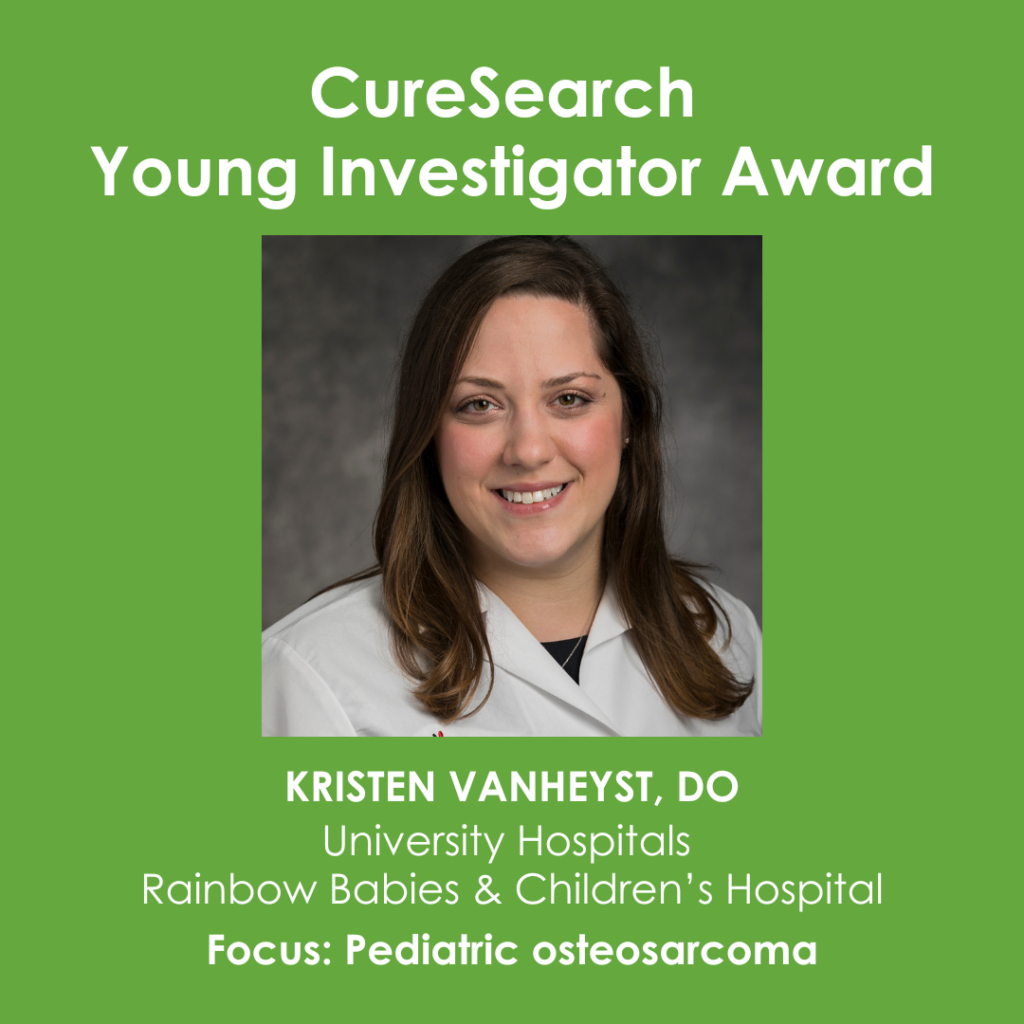
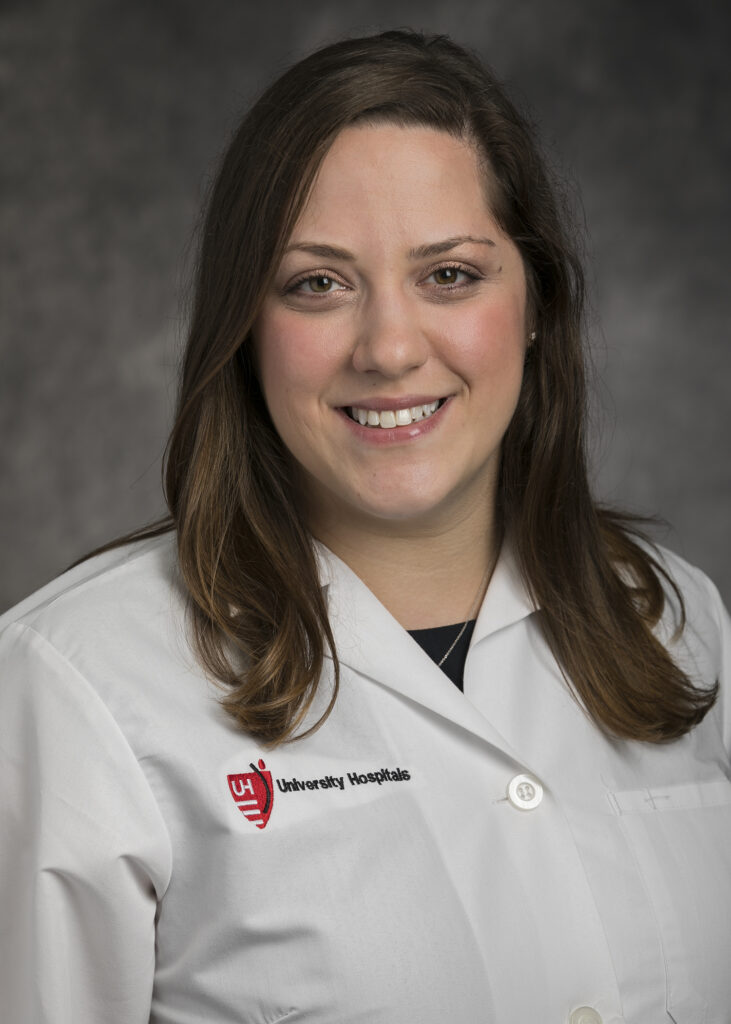
Kristen VanHeyst, DO of University Hospitals Rainbow Babies & Children’s Hospital’s Angie Fowler Adolescent & Young Adult Cancer Institute, received a CureSearch Young Investigator Award to find immunotherapeutic options for osteosarcoma.  

Kristen VanHeyst, DO

Although overall survival rates for osteosarcoma are improving, there have been no significant improvements in survival outcomes for patients with metastatic pulmonary osteosarcoma – osteosarcoma that has spread. This project may highly impact the survival of osteosarcoma patients by offering real clinical opportunities for treatment.  

“As a Pediatric Hematologist/Oncologist, I care for many patients with a variety of malignancies,” said Dr. VanHeyst. “I look forward to impacting clinical translation in an effort to improve patient care and treatment options.” 

Dr. VanHeyst will target the molecule TGF-ß, which is produced by osteosarcoma cells and immune cells in the tumor microenvironment. The presence of TGF-ß dampens the ability of the patient’s immune system to eradicate this tumor. 

“This project is innovative and may highly impact the survival of pediatric and adolescent and young adult patients with osteosarcoma by offering hope for finding curative options,” said Holly Zink, Director of Research and Programs. 

About the CureSearch Young Investigator Award  

The CureSearch Young Investigator Award encourages promising scientists, early in their careers, to remain in their field of research by providing financial support, career development and mentoring opportunities. These grants are limited to truly transformational science designed to deliver innovative cancer treatments toward clinical trials and train the next generation of pediatric cancer researchers. 

To learn more about how you can support innovative projects like these and help advance childhood cancer research, visit https://curesearch.org/donate-to-childrens-cancer-research

About CureSearch for Children’s Cancer 
CureSearch for Children’s Cancer, a national nonprofit organization that works to end childhood cancer by driving targeted and innovative research with measurable results in an accelerated time frame. Using a unique funding strategy, CureSearch only funds translational research projects with the strongest potential to become a new treatment and quickly reach patients. To learn more visit curesearch.org. 

The post CureSearch to fund new study for aggressive pediatric bone cancer appeared first on CureSearch for Children's Cancer.

The post CureSearch to fund new study for aggressive pediatric bone cancer appeared first on CureSearch for Children's Cancer.

CureSearch to fund new cutting-edge study for rare blood cancer in children

Unknown Reply 07:04

Project will examine how and why children develop AML, the leading cause of childhood leukemia mortality 

Bethesda, Md. – April 20, 2023 – CureSearch for Children’s Cancer, a national nonprofit on a mission to end childhood cancer by driving targeted and innovative research in an accelerated time frame, announced today it will fund an innovative project to study acute myeloid leukemia (AML), a rare blood cancer in children. 

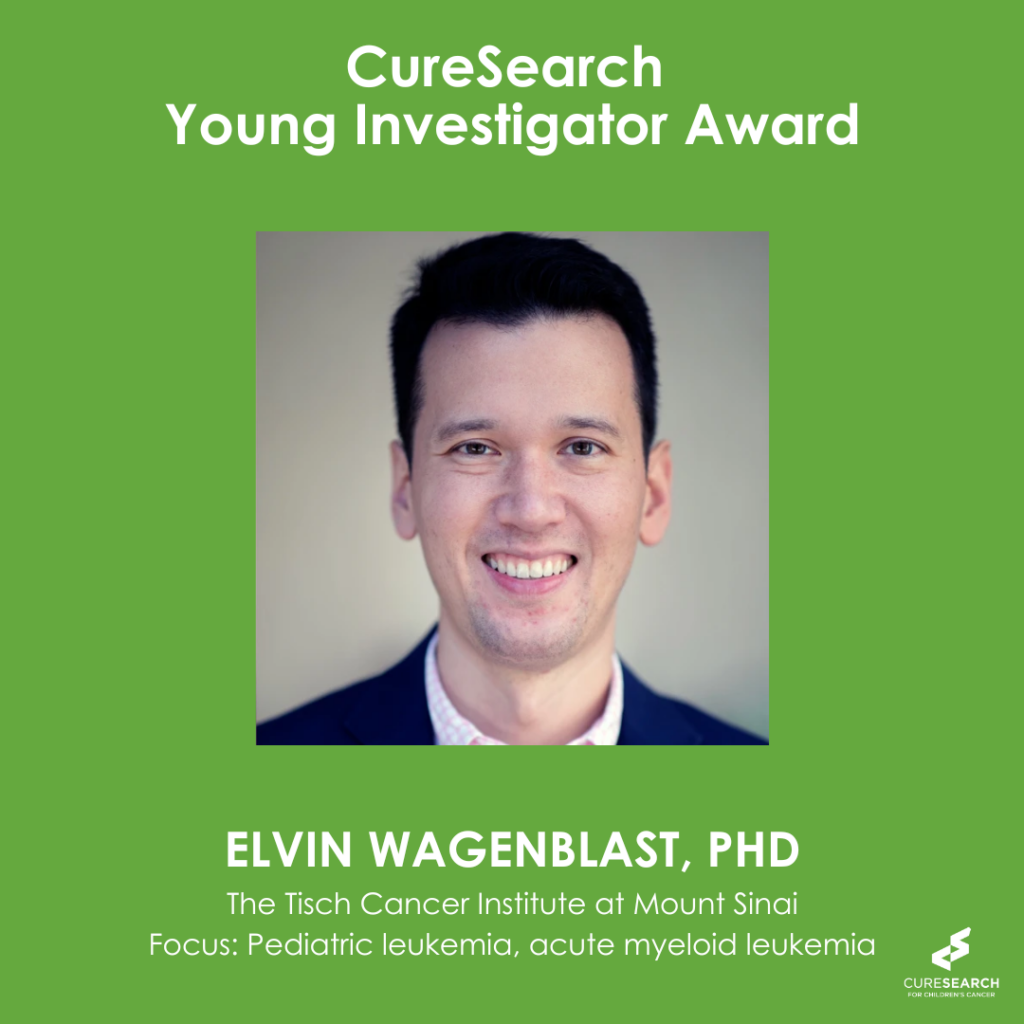
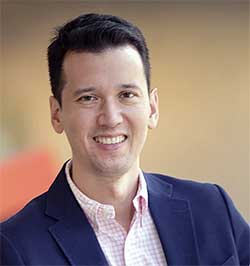
Elvin Wagenblast, PhD
Elvin Wagenblast, Ph

Elvin Wagenblast, PhD, of The Tisch Cancer Institute at Mount Sinai, received a CureSearch Young Investigator Award to develop a better understanding of AML in order to guide treatment for patients where standard chemotherapy is ineffective. 

Leukemia is one of the most frequent cancers in children. Although AML only accounts for 20% of pediatric acute leukemias, it is the leading cause of death in children diagnosed with the disease.  

“My vision is to understand the earliest steps of how and why childhood leukemia initiates, and to use this knowledge to innovate therapeutic intervention,” said Dr. Wagenblast. 

Dr. Wagenblast is investigating how a normal blood stem cell can become cancerous. In leukemia, these genetic mutations can occur as early as during fetal development. His team is using state-of-the-art genome editing to uncover novel disease mechanisms and understand vulnerabilities of the disease like never before. 

“Dr. Wagenblast’s research is unique, technical, and highly innovative,” said Holly Zink, Director of Research and Programs at CureSearch. “He is among very few investigators who have the potential to pursue this type of research to identify new therapeutic targets in this devastating type of pediatric leukemia.” 

About the CureSearch Young Investigator Award 

The CureSearch Young Investigator Award encourages promising scientists, early in their careers, to remain in their field of research by providing financial support, career development and mentoring opportunities. These grants are limited to truly transformational science designed to deliver innovative cancer treatments toward clinical trials and train the next generation of pediatric cancer researchers. 

This project is supported in part by Team Steve: the Steven Crowe Legacy Fund, which was established to raise meaningful funds for childhood cancer research in honor of Steven Crowe who passed away from AML in 2005.  

To learn more about how you can support innovative projects like these and help advance childhood cancer research, visit  https://curesearch.org/donate-to-childrens-cancer-research

About CureSearch for Children’s Cancer 
CureSearch for Children’s Cancer, a national nonprofit organization that works to end childhood cancer by driving targeted and innovative research with measurable results in an accelerated time frame. Using a unique funding strategy, CureSearch only funds translational research projects with the strongest potential to become a new treatment and quickly reach patients. To learn more visit curesearch.org. 

The post CureSearch to fund new cutting-edge study for rare blood cancer in children appeared first on CureSearch for Children's Cancer.

The post CureSearch to fund new cutting-edge study for rare blood cancer in children appeared first on CureSearch for Children's Cancer.

CureSearch to lead impact study on cost, treatment benefits of molecular testing for childhood cancer patients

Unknown Reply 09:03

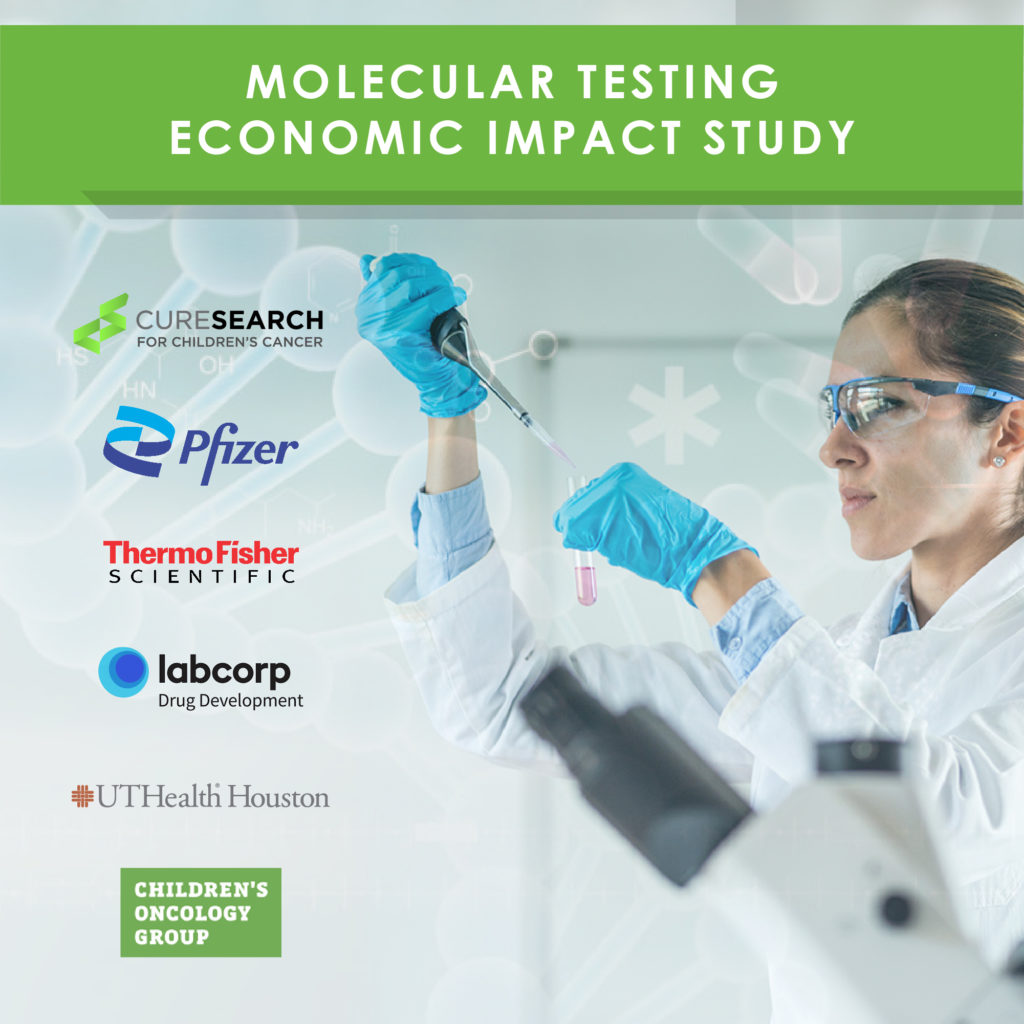
Bethesda, Md. – January 18, 2023 – CureSearch for Children’s Cancer, a national nonprofit dedicated to ensuring that every child diagnosed with cancer has a safe and effective treatment option, will lead a healthcare economic study to determine how molecular testing could benefit treatment decisions for pediatric cancer patients.  

Cancer is the number one disease killer in children in the US. Although survival rates for the most common types of childhood cancer have greatly increased in recent years, there has been little improvement in the prognosis for many less common tumor types. There is an urgent need to adapt new technologies, techniques, and collaborative approaches to develop safe, effective therapies for children – techniques like molecular testing. CureSearch is collaborating with leading research institutions and corporations to assess how molecular characterization of a patient’s tumor impacts diagnosis, treatment, and cost of treatment. 

“Many patients cannot get access to promising treatments because today’s healthcare payment systems put undue burdens on patient families, physicians, and hospitals,” said Heidi Russell, MD, PhD, Professor at the UTHealth Houston School of Public Health. “Until we address the costs and reimbursements for molecular testing, it will remain beyond the reach of many for financial reasons.” Dr. Russell is the principal investigator of the study. 

In cancer, molecular testing is a laboratory method that uses a sample of tissue, blood, or other body fluid to identify certain genes, proteins, or other molecules that may indicate the presence of a tumor.  

“The current era of drug development relies heavily on molecular testing as a way to identify the correct therapy for each individual patient, potentially enhancing efficacy while reducing morbidity. This is especially important when considering novel therapeutics for children with cancer,” said Geoffrey Kannan, PhD, MD, Senior Medical Director of Oncology at Labcorp Drug Development. 

Increasingly, doctors and clinical researchers recognize how molecular testing helps guide treatment decisions. Unfortunately, there are significant barriers to the broad implementation of molecular testing for pediatric cancer.  

“To realize the benefits of targeted therapies and identify eligible patients, molecular testing needs to be readily accessible and properly reimbursed,” said Luca Quagliata, PhD, BCMAS, COA Vice President and Global Head of Medical Affairs for Clinical Next-Generation Sequencing and Oncology at Thermo Fisher Scientific. “Through the use of ultra-rapid, automated molecular testing solutions, we can make vital genomic information actionable for clinicians treating pediatric patients with cancer, ultimately helping impact patient outcomes.” 

This research will provide a better understanding of the molecular causes of childhood cancers and open the field to developing new, more effective, and potentially less-toxic treatments. This is especially important for childhood cancers with limited treatment options. 

“Precise molecular characterization of pediatric tumors is critical to matching pediatric patients with the most effective, least toxic therapies, including new therapies,” said Jodi Muscal, MD, Pediatric Clinical Director at Pfizer. 

To promote broad accessibility of molecular testing for children with cancer, the Children’s Oncology Group (COG) launched the Molecular Characterization Initiative (MCI) in March 2022 through its overarching cancer registry and biobanking study, Project: EveryChild (PEC). Funded by the National Cancer Institute, MCI is now open to children with newly diagnosed central nervous system tumors, soft tissue sarcoma, and a variety of other rare cancers. 

“The game changer for patients is that we’re going to understand the patient’s disease precisely and comprehensively in a way that we’ve done piecemeal so far,” said Douglas S. Hawkins, MD, Group Chair of COG. “We’re hoping to remove barriers from diagnostics for all kids with cancer, no matter what type of tumor they have or where they are receiving their care.” 

“Providing treatment tailored to an individual patient’s genetic cancer is a fundamental hope of pediatric precision medicine,” said Holly Zink, Director of Research and Programs at CureSearch. “An accurate molecular diagnosis can help oncologists choose the most effective and potentially least toxic treatment for each child. This landmark project will shape the future of pediatric cancer medicine.” 

Real progress in advancing pediatric cancer patient care will require collaboration among science, academia, regulatory, funding, and industry leaders. CureSearch is uniquely positioned to drive critical stakeholder collaborations such as this, and accelerate the pace of pediatric drug development. 

Collaborating institutions include: Children’s Oncology Group (COG), Labcorp Drug Development, Pfizer, UTHealth Houston School of Public Health, and Thermo Fisher Scientific. 

The post CureSearch to lead impact study on cost, treatment benefits of molecular testing for childhood cancer patients appeared first on CureSearch for Children's Cancer.

The post CureSearch to lead impact study on cost, treatment benefits of molecular testing for childhood cancer patients appeared first on CureSearch for Children's Cancer.

Subscribe Our Newsletter

Colaboradores

Arquivo do blog

Tecnologia do Blogger.

Search

Most Complete Tools & Resources

Most Complete Bloggers, Freelancers & Youtubers Tools and Resources

How To Start a Blog Guide

How to Start a Blog in 3 minutes banner

Professional Email Marketing

Email Marketing for Professional Bloggers

Build Your Online Store

Shopio Build Online Store

Start your own Consultation business

Insta Consultant Toolkit

Follow us on Pinterest

Follow me on Pinterest